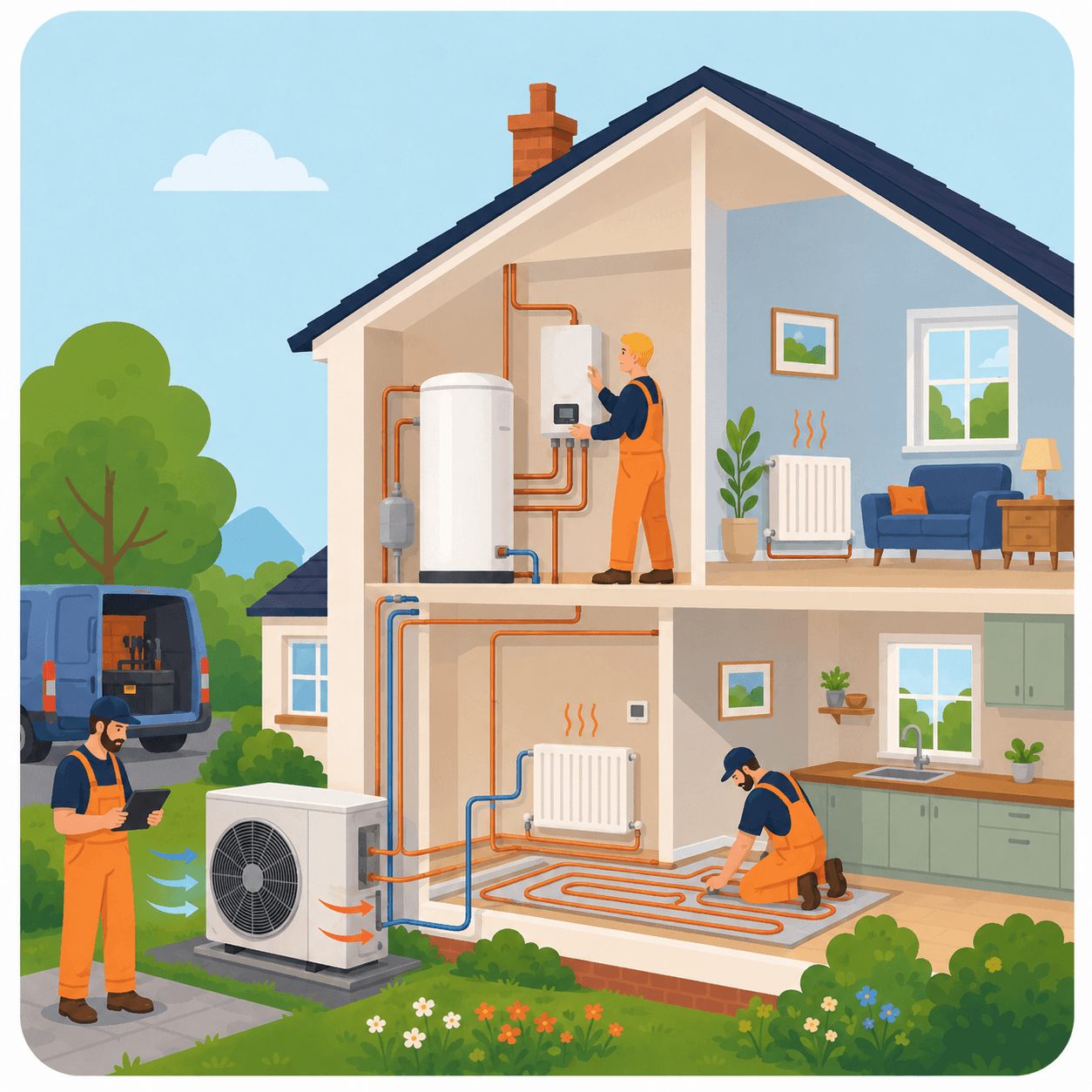
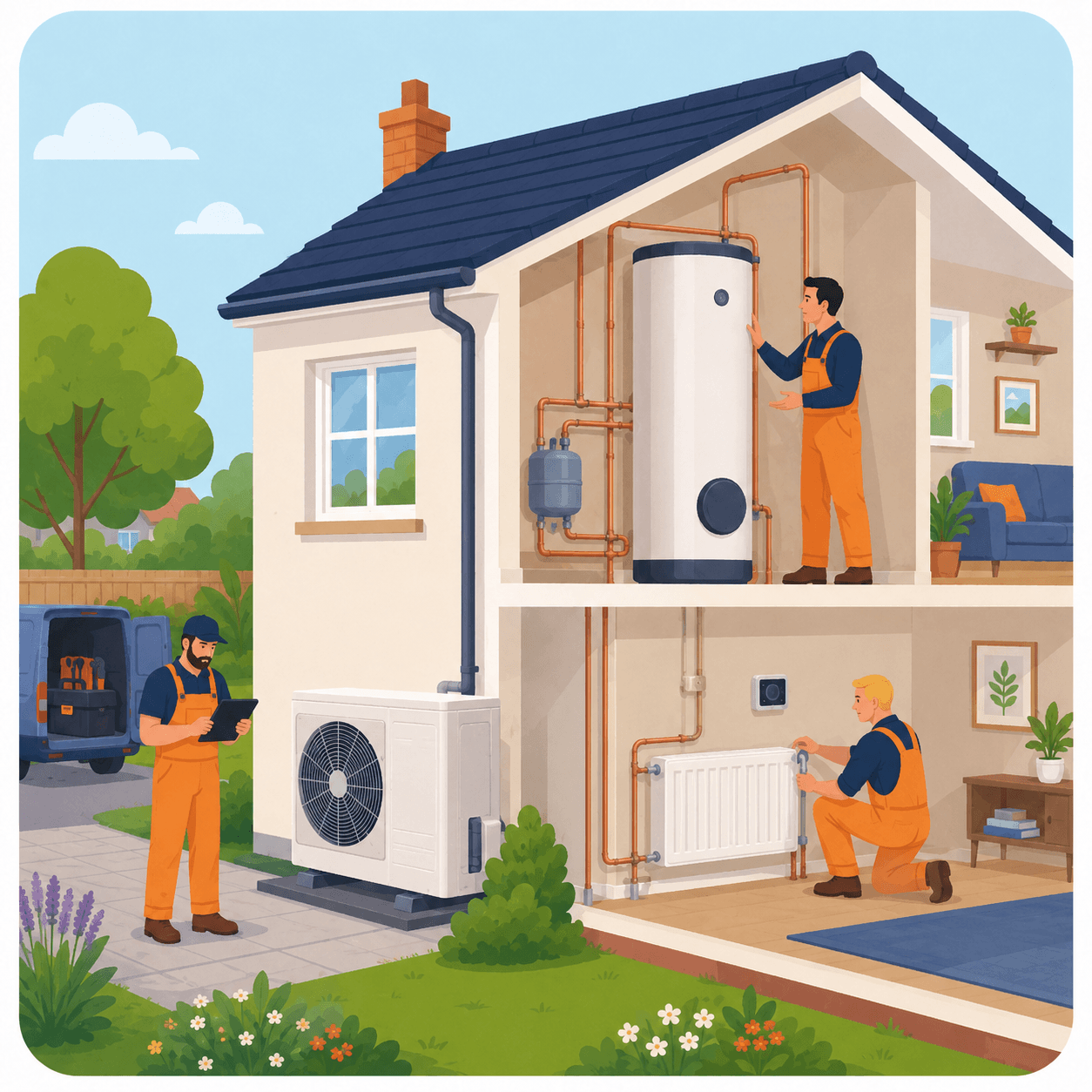
If you are thinking about installing an air source heat pump, you may have heard that you might also need a hot water cylinder.
For some homeowners, this is one of the biggest differences between a heat pump and a modern combi boiler. A combi boiler heats hot water on demand, so many homes no longer have a cylinder. A heat pump usually works differently. In many systems, it heats water gradually and stores it in a cylinder so it is ready when you need it.
This can raise a few questions. Where does the cylinder go? How big does it need to be? Can you use your existing cylinder? Will it provide enough hot water for showers and baths?
This guide explains heat pump hot water cylinders in simple terms.
What Is a Hot Water Cylinder?
A hot water cylinder is a storage tank that holds heated water for use around the home.
It supplies hot water to taps, showers, baths and sometimes other outlets. The water is heated in advance and stored until needed.
Traditional cylinders have been used in homes for many years, especially with older regular boilers or system boilers. With heat pumps, cylinders are often used because the heat pump heats water in a steady, efficient way rather than producing instant hot water like a combi boiler.
A cylinder is usually found in places such as:
- An airing cupboard
- Utility room
- Garage
- Plant room
- Loft space, where suitable
- Large cupboard
- Former boiler or tank cupboard
The right location depends on the property layout, pipe routes, floor strength, access and the overall heating design.
Why Do Heat Pumps Often Need a Hot Water Cylinder?
Most air-to-water heat pumps are designed to provide heating and hot water by warming water in the heating system.
For space heating, that water can go to radiators or underfloor heating. For hot water, it usually needs to be stored in a cylinder.
This is because heat pumps generally work best by heating water steadily over time. They are very different from combi boilers, which can rapidly heat mains water as it passes through the boiler.
A heat pump cylinder allows the system to:
- Store hot water for later use
- Provide hot water for showers, baths and taps
- Heat water efficiently over a longer period
- Work with lower-temperature heating design
- Support a home that no longer relies on instant gas hot water
For many heat pump installations, the cylinder is a central part of the system, not an optional extra.
Is a Heat Pump Cylinder Different from a Normal Cylinder?
Yes, in many cases.
A heat pump cylinder is designed to work with the way heat pumps produce heat. Heat pumps often run at lower flow temperatures than gas boilers, so the cylinder needs to transfer heat effectively from the heat pump into the stored water.
The main difference is usually the internal heat exchanger coil.
A standard hot water cylinder designed for a boiler may not have a large enough coil to work efficiently with a heat pump. A heat pump cylinder normally has a larger heat exchanger area so it can transfer heat effectively at lower temperatures.
This helps the heat pump heat the stored water without having to work harder than necessary.
Can You Use Your Existing Hot Water Cylinder?
Sometimes, but often it may need replacing.
If your home already has a hot water cylinder, an installer will check whether it is compatible with a heat pump. Some existing cylinders may not be suitable because the internal coil is too small, the insulation is poor, or the cylinder is not sized correctly for the household.
The installer may check:
- Cylinder size
- Cylinder age
- Heat exchanger coil size
- Insulation quality
- Condition of the cylinder
- Available space
- Existing pipework
- Hot water demand
- Whether an immersion heater is fitted
- Whether the cylinder is vented or unvented
- Safety controls and valves
If the cylinder is not suitable, replacing it with a heat pump-compatible cylinder may be recommended.
Vented vs Unvented Cylinders
Hot water cylinders are usually either vented or unvented.
Vented Cylinders
A vented cylinder is supplied by a cold water tank, often in the loft. It is usually found in older heating systems.
Vented systems can work well in some properties, but they rely on gravity and tank height, which can affect water pressure.
Unvented Cylinders
An unvented cylinder is connected directly to the mains cold water supply. It usually provides stronger hot water pressure than a traditional vented system.
Unvented cylinders need specific safety controls and should be installed by qualified professionals.
Many modern heat pump installations use unvented cylinders, but the best option depends on the home’s plumbing system, water pressure and layout.
How Big Should a Heat Pump Cylinder Be?
Cylinder size depends on how much hot water the household uses.
A small home with one bathroom and two occupants may need a different cylinder from a larger home with several bathrooms, frequent baths and a busy morning routine.
The installer should consider:
- Number of people in the home
- Number of bathrooms
- Shower use
- Bath use
- Whether multiple outlets are used at once
- Available space
- Reheat time
- Heat pump output
- Cylinder temperature settings
- Household routines
A cylinder that is too small may run out of hot water too quickly. A cylinder that is much larger than needed may take up unnecessary space and store more hot water than the household uses.
The goal is to size the cylinder properly, not simply fit the largest one possible.
What Happens If the Cylinder Is Too Small?
If the cylinder is too small for the household, you may notice:
- Hot water running out during showers
- Not enough water for a bath
- Long waits for water to reheat
- Problems when several people use hot water close together
- A need to use backup heating more often
- Frustration during busy morning or evening routines
This is why hot water demand should be assessed properly before installation.
A heat pump cylinder needs to match the way the household actually uses hot water.
What Happens If the Cylinder Is Too Large?
A larger cylinder can store more hot water, but bigger is not always better.
An oversized cylinder may:
- Take up more space than needed
- Cost more to install
- Have greater standing heat losses
- Take longer to heat
- Store water that is rarely used
- Make system design less efficient
A well-sized cylinder should provide enough hot water without excessive storage.
Where Can a Heat Pump Cylinder Go?
A heat pump cylinder usually needs to go inside the home or in a protected internal area.
Common locations include:
- Airing cupboard
- Utility room
- Garage
- Plant room
- Large cupboard
- Loft space, if suitable
- Former boiler cupboard
- Under-stairs area, where space and access allow
The location needs to be practical. The cylinder must be accessible for servicing and should be close enough to bathrooms, kitchens and the heat pump system to keep pipe routes sensible.
The installer will consider:
- Floor strength
- Space around the cylinder
- Pipe routes
- Access for maintenance
- Distance to hot water outlets
- Electrical connections
- Safety controls
- Ventilation, where relevant
- Risk of freezing in garages or lofts
- Whether the cylinder can be removed or replaced in future
A hidden location is not always the best location. Access matters.
Can a Cylinder Go in the Loft?
Sometimes, but it needs careful checking.
A loft can seem like a convenient place because it keeps the cylinder out of living areas. However, not every loft is suitable.
Before placing a cylinder in the loft, an installer should consider:
- Structural strength of the loft floor
- Safe access
- Permanent boarding
- Lighting
- Pipe insulation
- Risk of freezing
- Maintenance access
- Height and clearance
- Weight when the cylinder is full
- Route for pipework and safety discharge
A full hot water cylinder is heavy. It should not simply be placed in a loft without confirming that the structure and access are suitable.
Can a Cylinder Go in a Garage?
A garage may be suitable for some homes, especially if there is enough space and good access.
However, garages are often colder than the main house, so pipework and the cylinder may need suitable insulation. The installer will also need to think about freezing risk, safety discharge routes, and how far hot water has to travel to taps and showers.
A garage location may work well if:
- There is enough space
- The floor is suitable
- Pipe routes are practical
- The cylinder can be protected from cold
- Maintenance access is easy
- The location does not create long hot water delays
It may be less suitable if the garage is detached, very cold, or far from bathrooms and kitchens.
What Is Reheat Time?
Reheat time is how long the cylinder takes to heat back up after hot water has been used.
This matters because a heat pump usually heats hot water differently from a combi boiler. Instead of instant hot water production, the system heats stored water in the cylinder.
Reheat time depends on:
- Cylinder size
- Heat pump output
- Starting water temperature
- Target water temperature
- Coil size
- System design
- Whether backup heating is used
- Hot water usage pattern
A well-designed system should provide enough hot water for normal household use without unnecessary waiting. But the reheat pattern may feel different if you are used to a combi boiler.
Will a Heat Pump Cylinder Provide Enough Hot Water?
It should, if it is sized and installed correctly.
A properly designed system should consider the household’s normal hot water use. This includes showers, baths, washing up and any times when several people need hot water close together.
If a household has high hot water demand, the cylinder may need to be larger or set up differently.
The installer should ask about:
- Number of occupants
- Number of showers per day
- Bath use
- Shower flow rates
- Peak hot water times
- Whether several people shower in a row
- Guest use
- Future household changes
The best hot water system is one that matches real use, not just the number of bedrooms.
How Does a Heat Pump Heat the Cylinder?
A heat pump heats the cylinder by sending warm water through a coil or heat exchanger inside the cylinder.
The coil transfers heat into the stored domestic hot water. The stored water is then available for taps, showers and baths.
The heat pump does not usually mix heating water directly with your tap water. The heat is transferred through the cylinder’s heat exchanger.
This is similar in principle to how many boiler cylinders work, but a heat pump cylinder is designed to transfer heat effectively at lower operating temperatures.
What Is an Immersion Heater?
Many hot water cylinders include an immersion heater.
An immersion heater is an electric heating element inside the cylinder. It can heat the stored water directly when needed.
In a heat pump system, an immersion heater may be used:
- As a backup heat source
- For occasional high-temperature cycles
- During maintenance or fault conditions
- To support hot water demand in some setups
- As part of system hygiene settings
The immersion heater should not normally be doing all the work if the heat pump system is operating correctly. If it is used too often, electricity use may increase.
What About Legionella Protection?
Hot water systems need to be designed and managed safely.
Because heat pump systems can operate at lower temperatures for efficiency, hot water hygiene needs to be considered properly. Many systems include settings that periodically raise the cylinder temperature to help manage bacteria risk.
This may be done using the heat pump, an immersion heater, or a combination of both, depending on the system.
The important point for homeowners is not to disable safety settings without advice. Cylinder temperature, usage patterns and hygiene controls should be set by a qualified installer.
Good design should balance:
- Hot water safety
- Energy efficiency
- Household comfort
- Scald risk
- Cylinder size
- System controls
- Manufacturer guidance
If you are unsure how your cylinder is set up, ask your installer to explain the hot water schedule and hygiene cycle.
What Temperature Is the Hot Water Stored At?
The cylinder temperature depends on the system design, controls, hot water needs and hygiene settings.
Higher storage temperatures can provide more usable hot water, but they may reduce heat pump efficiency and increase standing heat losses. Lower temperatures can be more efficient, but the system still needs to provide safe and comfortable hot water.
A heat pump installer should set the cylinder up properly rather than relying on guesswork.
Homeowners should ask:
- What temperature will the cylinder normally store water at?
- Is there a hygiene or pasteurisation cycle?
- How often does it run?
- Does it use the heat pump or immersion heater?
- Can the schedule be adjusted around household routines?
- What should not be changed without advice?
Understanding these settings can help avoid confusion after installation.
How Is a Heat Pump Cylinder Controlled?
Heat pump cylinders are controlled through the heat pump system controls.
The controls may allow you to set:
- Hot water schedule
- Target cylinder temperature
- Boost function
- Holiday mode
- Hygiene cycle timing
- Immersion heater use
- Priority between heating and hot water
Some systems prioritise hot water at certain times. For example, the heat pump may pause space heating while it reheats the cylinder.
This is normal, but the schedule should be set sensibly so the home stays comfortable and hot water is ready when needed.
What Does “Hot Water Priority” Mean?
Hot water priority means the heat pump temporarily focuses on heating the hot water cylinder before returning to space heating.
This can be useful because the cylinder needs to reach its target temperature. Once the hot water demand is met, the heat pump can return to heating radiators or underfloor heating.
In a well-designed system, hot water priority should not cause noticeable comfort problems. But in homes with poor insulation or high heat loss, long hot water cycles may have more impact on space heating.
This is another reason heat pump sizing, cylinder sizing and insulation all need to be considered together.
Will Hot Water Be Instant?
Not exactly.
A cylinder stores hot water, so there should be hot water available when the cylinder is charged. However, when you open a tap, it may still take a short time for hot water to travel through the pipework to the outlet.
This delay depends on how far the tap or shower is from the cylinder.
Long pipe runs can mean:
- More water wasted while waiting for hot water
- More heat lost from pipes
- Longer wait times at taps
- Less convenience in bathrooms far from the cylinder
This is why cylinder location and pipe routes matter.
Why Pipe Insulation Matters
Hot water pipework should be insulated where appropriate.
If hot water travels through uninsulated pipes, heat can be lost before it reaches the tap, shower or bath. This can reduce efficiency and may make the system feel less responsive.
Pipe insulation is especially important where pipes run through:
- Lofts
- Garages
- Unheated cupboards
- Floor voids
- External walls
- Long routes to bathrooms
Good pipe insulation is a small detail that can support the whole system.
Does a Heat Pump Cylinder Need Maintenance?
Yes, it should be checked as part of the heating system’s maintenance.
The cylinder itself does not usually require daily attention, but it contains important components that should be inspected periodically.
Maintenance may include checking:
- Cylinder controls
- Safety valves
- Expansion vessel
- Immersion heater
- Thermostats
- Pipework
- Insulation
- Discharge pipework
- Signs of leaks
- System pressure
- Hot water performance
- Manufacturer service requirements
Unvented cylinders have specific safety components and should be serviced by someone qualified to work on them.
What Is Standing Heat Loss?
Standing heat loss is the heat lost from stored hot water while it sits in the cylinder.
Modern cylinders are well insulated, but no cylinder is perfect. Some heat will gradually escape.
Standing heat loss depends on:
- Cylinder insulation quality
- Cylinder size
- Storage temperature
- Location
- Surrounding temperature
- Pipe insulation
- How often hot water is used
A larger cylinder may lose more heat overall than a smaller one, which is another reason correct sizing matters.
What If You Currently Have a Combi Boiler?
If you currently have a combi boiler, you may not have a hot water cylinder at all.
Switching to a heat pump may mean finding space for a cylinder. This can be one of the biggest practical changes for some homes.
Possible cylinder locations might include:
- A former airing cupboard
- A utility room
- A garage
- A landing cupboard
- A loft, if suitable
- A newly created plant cupboard
The installer will need to consider pipe routes and available space before confirming whether a heat pump system is practical.
For some homeowners, the cylinder is a bigger consideration than the outdoor unit.
What If You Already Have an Airing Cupboard?
An airing cupboard can be a good location for a heat pump cylinder, especially if it previously housed a hot water cylinder.
However, the new cylinder may be larger or shaped differently from the old one. It may also need different pipework, controls or access space.
The installer should check:
- Cupboard dimensions
- Door access
- Floor strength
- Pipe routes
- Clearance around controls
- Access for servicing
- Whether shelves need removing
- Whether ventilation or safety discharge routes are suitable
An airing cupboard may be practical, but it still needs proper assessment.
Can Solar Panels Work with a Heat Pump Cylinder?
Yes, solar panels can work well alongside a heat pump system, depending on the setup.
Solar PV panels generate electricity, which may help power the heat pump or household appliances during the day. Some homes may also use smart controls or diverters to help use excess solar electricity for hot water, although the right approach depends on the system.
A heat pump cylinder may also include an immersion heater, which can sometimes be linked to solar PV diversion technology.
However, this should be designed carefully. The installer should make sure the system is safe, efficient and compatible.
Can Battery Storage Help?
Battery storage may help some homes use more of their own solar electricity, including electricity that could support heat pump operation.
This is not essential for a heat pump cylinder, but it may be part of a wider home energy plan.
Whether it makes sense depends on:
- Solar panel generation
- Household electricity use
- Heat pump demand
- Hot water schedule
- Battery size
- Smart tariff availability
- Budget
- Long-term energy goals
The hot water cylinder is one part of the wider system.
Common Mistakes with Heat Pump Hot Water Cylinders
A heat pump cylinder needs to be planned properly. Common mistakes include:
- Choosing a cylinder that is too small
- Choosing a cylinder that is much larger than needed
- Using an old cylinder that is not heat pump compatible
- Poor pipe insulation
- Long pipe runs to bathrooms
- Poorly planned cylinder location
- Overusing the immersion heater
- Disabling hygiene settings
- Not understanding the hot water schedule
- Poor commissioning
- Lack of maintenance access
- Not considering future household demand
Most of these issues can be avoided with a good survey and clear explanation before installation.
Questions to Ask Before Installing a Heat Pump Cylinder
Before agreeing to a heat pump cylinder, ask:
- Do I need a new cylinder?
- Can my existing cylinder be reused?
- What size cylinder is being recommended?
- Why is that size suitable for my household?
- Where will the cylinder go?
- Will the floor support it safely?
- How long will it take to reheat?
- How will hot water hygiene be managed?
- Will an immersion heater be included?
- How often is the immersion heater expected to run?
- How far will hot water travel to bathrooms and taps?
- Will pipework be insulated?
- What controls will I use?
- What maintenance is needed?
- What happens if my hot water use increases in future?
Clear answers will help you understand whether the system is suitable for your home.
Final Thoughts
A hot water cylinder is often an important part of an air source heat pump system. It stores hot water so the home has a reliable supply for taps, showers and baths.
The right cylinder should be properly sized, heat pump compatible, well insulated and located somewhere practical. It should also be set up with suitable controls, safe temperature management and good access for maintenance.
For homeowners moving from a combi boiler, the biggest change may be getting used to stored hot water again. For homes that already have a cylinder, the key question is whether the existing one is suitable for heat pump use.
At Warmr, we help homeowners understand practical energy-efficient upgrades, including heat pumps, hot water cylinders, insulation, heating controls and wider home improvements. The right approach starts with looking carefully at how the home uses heating and hot water, so the system is designed around real day-to-day needs.