One of the most common questions homeowners ask about solar panels is simple: do they still work when it is cloudy?
The short answer is yes. Solar panels do not need bright, direct sunshine all day to generate electricity. They work from daylight, which means they can still produce power on cloudy, overcast or dull days.
For homes in the UK, including areas such as the North West where cloudy weather is common, this is an important point. Solar panels can still be a worthwhile energy efficiency upgrade, but it helps to understand how they perform in real-world weather.
How Do Solar Panels Generate Electricity?
Solar panels, also known as solar PV panels, contain photovoltaic cells. These cells convert light from the sun into electricity.
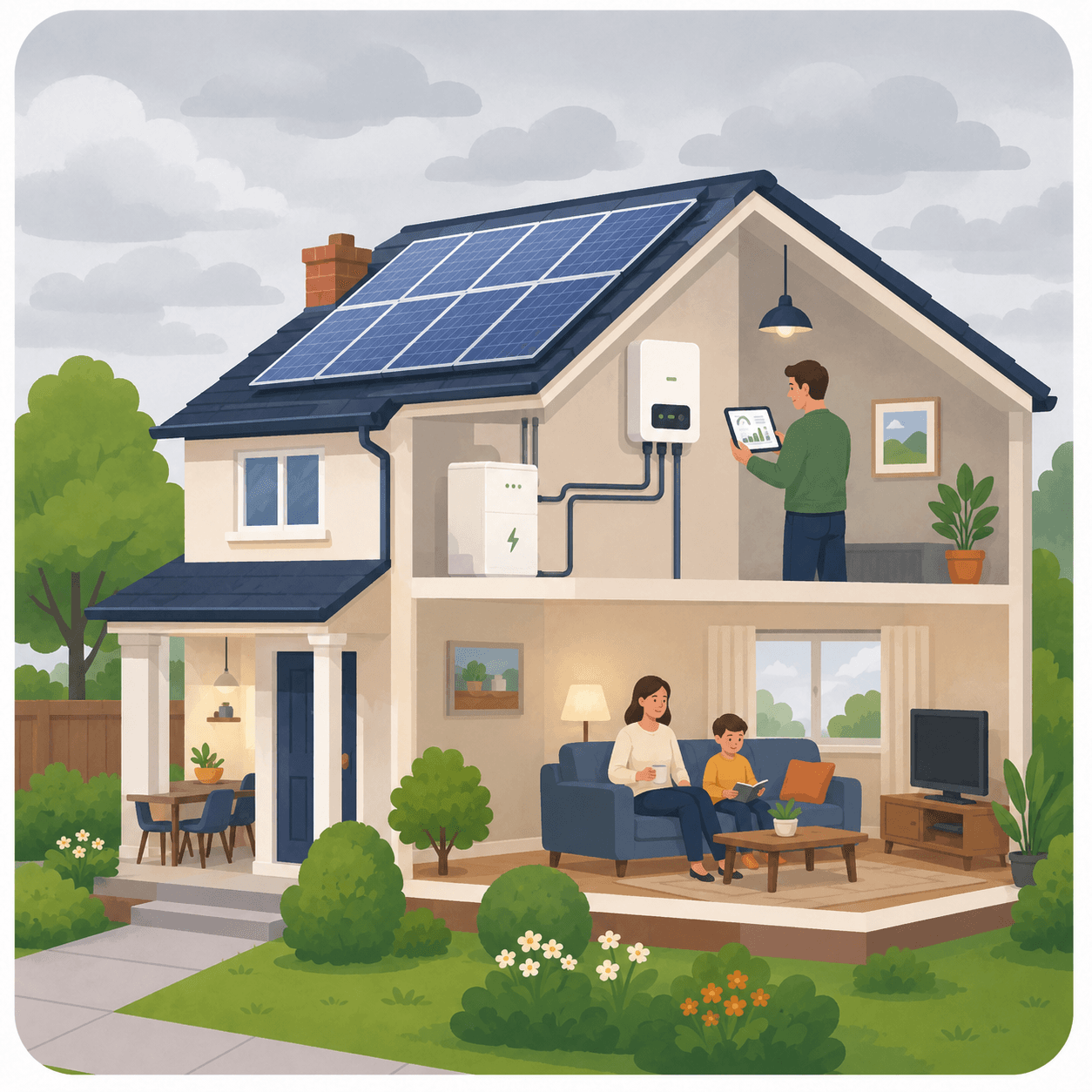
The panels generate direct current electricity, often called DC electricity. Because homes use alternating current electricity, known as AC electricity, the system includes an inverter. The inverter converts the electricity into a form your appliances can use.
A typical solar PV system includes:
- Solar panels on the roof
- Mounting rails and fixings
- Cabling from the panels
- An inverter
- Connection to the home’s electrical system
- Optional battery storage
- Monitoring equipment
The important thing to remember is that solar panels respond to light, not heat. This is why they can still work when the weather is cool or cloudy.
Do Solar Panels Need Direct Sunlight?
No, solar panels do not need direct sunlight to work.
Direct sunlight gives the best output, but panels can also use diffuse light. Diffuse light is sunlight that has been scattered by clouds or haze. It is weaker than direct sunlight, but it still contains enough light for solar panels to generate electricity. The amount they produce depends on light levels, season, roof direction, shading, system size and the quality of the installation.
This is why a solar panel system can continue producing power even when the sky is grey.
You may notice lower generation during:
- Thick cloud
- Heavy rain
- Fog
- Short winter days
- Early morning or late evening
- Periods of shading
- Snow cover, if panels are covered
But lower output does not mean no output.
How Much Less Electricity Do Panels Produce on Cloudy Days?
Output varies from one day to another.
On a bright summer day, panels may generate a lot of electricity for several hours. On a dull winter day, generation may be much lower. On a mixed day, generation may rise and fall as clouds move across the sky.
The exact difference depends on:
- How thick the cloud cover is
- Time of year
- Time of day
- Roof direction
- Roof pitch
- Shading
- Panel quality
- Inverter setup
- Whether the panels are clean and unobstructed
It is best to think of solar generation across the whole year rather than judging performance from one cloudy day. A well-designed system is planned around annual generation, not just the sunniest days.
Do Solar Panels Work in Winter?
Yes, solar panels can work in winter.
The main challenge in winter is not usually temperature. It is shorter daylight hours and lower sun angle. There are fewer hours of light, and the sun is lower in the sky, so solar generation is usually lower than in summer.
However, panels can still generate electricity during daylight hours, even in colder weather.
Winter performance may be affected by:
- Shorter days
- More cloud cover
- Lower sun angle
- Snow or frost on panels
- Increased household electricity use
- Shading from trees or nearby buildings
For many homes, summer generation is much higher than winter generation. This seasonal difference is normal.
Does Rain Stop Solar Panels Working?
Rain usually reduces solar output while it is falling because the sky is often darker and cloudier. However, rain does not stop panels from working completely if there is daylight.
Rain can also help wash away some dirt, dust and pollen from the panels, which may help keep them performing well. That said, rain is not a replacement for proper maintenance if panels become heavily soiled or affected by bird droppings, leaves or moss.
The main issue is light level. The brighter the sky, the more electricity the panels are likely to generate.
Do Solar Panels Work Better When It Is Hot?
Not necessarily.
Solar panels need sunlight, but very high temperatures can slightly reduce panel efficiency. This means a cool, bright day can sometimes be good for solar generation.
This often surprises homeowners because people associate solar power with hot weather. In reality, it is light that matters most.
The best conditions are usually:
- Bright daylight
- Little or no shading
- Good roof orientation
- Clear sky
- Cooler panel temperatures
- Clean, unobstructed panels
Hot weather alone does not guarantee better performance.
What Roof Direction Works Best?
Solar panels usually perform best on a south-facing roof with little or no shading. This gives the panels more direct sunlight across the day.
However, east and west-facing roofs can still be suitable. East-facing panels tend to generate more in the morning, while west-facing panels tend to generate more later in the day.
This can sometimes match household routines well. For example, west-facing panels may be useful for homes where electricity use is higher in the afternoon and early evening.
A proper solar survey should look at:
- Roof direction
- Roof pitch
- Available space
- Shading
- Roof condition
- Electrical setup
- Household electricity use
The best system is not always the one with the most panels. It is the one designed properly for the roof and the household.
Why Shading Matters More Than Clouds
Cloud reduces overall light levels, but shading can sometimes cause a bigger problem.
If part of a solar panel array is shaded by a chimney, tree, dormer, aerial or nearby building, it can reduce generation from part of the system. Depending on the panel setup, shading one section can affect wider system performance.
Common shading sources include:
- Chimneys
- Trees
- Roof windows
- Dormers
- Neighbouring buildings
- Satellite dishes
- Aerials
- Nearby hills or structures
A solar installer should assess shading before recommending a system layout. In some cases, optimisers or microinverters may help reduce the impact of partial shading.
How Solar Generation Changes Through the Day
Solar panels do not produce the same amount of electricity all day.
Generation usually rises in the morning, peaks around the middle of the day, and falls again in the afternoon or evening. Cloud cover can make this pattern more uneven.
On a cloudy day, generation may still happen, but the output may be lower and more variable.
This is why monitoring apps can be useful. They show how much electricity your system is generating at different times, helping you understand when your home is using solar power.
How Solar Generation Changes Through the Year
Solar panel generation is seasonal.
In spring and summer, longer daylight hours and stronger sunlight usually mean higher generation. In autumn and winter, output is usually lower because days are shorter and the sun is weaker.
A homeowner may see:
- Higher generation from March to September
- Lower generation from October to February
- Strong peaks on bright summer days
- Reduced output on dark winter days
- Variation from one week to the next
This is normal. A good quote or system design should estimate annual generation and explain how output may vary across the year.
Are Solar Panels Worth It in Cloudy Areas?
They can be.
The UK is not known for constant sunshine, but solar panels can still generate electricity from daylight. For many homes, the question is not whether every day is sunny. It is whether the roof, household usage and system design make sense over the year.
Solar panels may still be worthwhile in cloudy areas if:
- The roof has good exposure to daylight
- Shading is limited
- The roof is in good condition
- The system is correctly sized
- The household can use some electricity during the day
- Battery storage is considered where suitable
- The installation is designed properly
- The homeowner understands seasonal variation
Cloudy weather reduces output, but it does not automatically make solar panels unsuitable.
What About the North West?
For homeowners in the North West, cloudy and rainy weather is part of everyday life. That can make people wonder whether solar panels are only really suitable for sunnier parts of the country.
The key point is that solar panels are designed to work from daylight. They will produce less on dull days, but they can still contribute to household electricity use over the year.
In the North West, roof suitability and shading are especially important. A clear, unshaded roof will usually perform better than a heavily shaded roof, regardless of region.
A good installer should give a realistic estimate based on the property, not a generic promise.
Can Battery Storage Help on Cloudy Days?
Battery storage can help some homes make better use of the electricity their panels generate, but it does not make panels produce more electricity.
A battery stores surplus electricity generated during the day so it can be used later, such as in the evening or overnight. This can be useful if your home produces more solar electricity than it uses at certain times.
On cloudy days, there may be less surplus electricity to store. However, across the year, a battery can help some households use more of their own solar generation.
Battery storage may be worth considering if:
- You are out during the day
- You use more electricity in the evening
- Your panels often generate surplus electricity
- You want to reduce grid electricity use
- You have or plan to install an electric vehicle
- You have or plan to install a heat pump
- You are interested in smart tariffs
A battery is not essential for every solar panel system, but it can be useful in the right home.
Can Solar Panels Power a Whole Home on Cloudy Days?
Sometimes they may cover a lot of daytime use, but not always.
On a cloudy day, a solar panel system may generate enough electricity for smaller appliances, lighting, laptops, fridges or background electricity use. It may not generate enough to cover high-demand appliances at the same time, especially in winter.
High-demand appliances include:
- Electric showers
- Ovens
- Kettles
- Tumble dryers
- Washing machines
- Electric heaters
- EV chargers
- Heat pumps during high demand periods
Solar panels can reduce how much electricity you buy from the grid, but most homes still need a grid connection, especially during evenings, winter and periods of low generation.
How to Get More Value from Solar Panels on Cloudy Days
You cannot control the weather, but you can improve how you use your solar electricity.
Practical steps include:
- Use appliances during daylight where convenient
- Avoid running several high-demand appliances at once
- Monitor generation through the system app
- Keep panels clear of heavy dirt, leaves or obstructions
- Reduce shading where possible, such as overgrown branches
- Consider battery storage if evening use is high
- Use timers carefully for appliances
- Match electricity use to the brighter parts of the day
- Keep the system maintained and monitored
These habits can help you use more of the electricity your panels generate.
Does Panel Quality Matter in Cloudy Conditions?
Panel quality can affect performance, but it is only one part of the picture.
Higher-quality panels may perform better in lower-light conditions, but roof suitability, shading, inverter choice and installation quality are also important.
When comparing systems, ask about:
- Panel efficiency
- Product warranty
- Performance warranty
- Inverter type
- Shading management
- Expected annual generation
- Monitoring options
- Installer accreditation
- Roof mounting system
- Aftercare and support
A well-designed system with reliable components is usually more important than focusing on one headline specification.
What About Solar Optimisers and Microinverters?
Solar optimisers and microinverters can help some systems, especially where shading affects different panels at different times.
In a standard string inverter setup, panels are connected together in groups. If one panel is shaded, it may affect the performance of the group.
Optimisers or microinverters can allow panels to operate more independently, which may reduce losses from shading or complex roof layouts.
They may be useful if your roof has:
- Chimney shading
- Multiple roof angles
- East and west-facing sections
- Dormers
- Trees nearby
- Partial shading at certain times of day
They are not always necessary, so the installer should explain whether they are genuinely useful for your property.
What Should a Solar Survey Include?
A proper solar survey should give you a realistic view of performance, including cloudy-day and seasonal variation.
The survey should consider:
- Roof direction
- Roof pitch
- Shading
- Roof size
- Roof condition
- Electrical system
- Inverter location
- Cable routes
- Battery options
- Household electricity use
- Expected annual generation
- Estimated self-consumption
- Any planning or access considerations
The goal is to design a system that suits the property, not just to fit the maximum number of panels.