

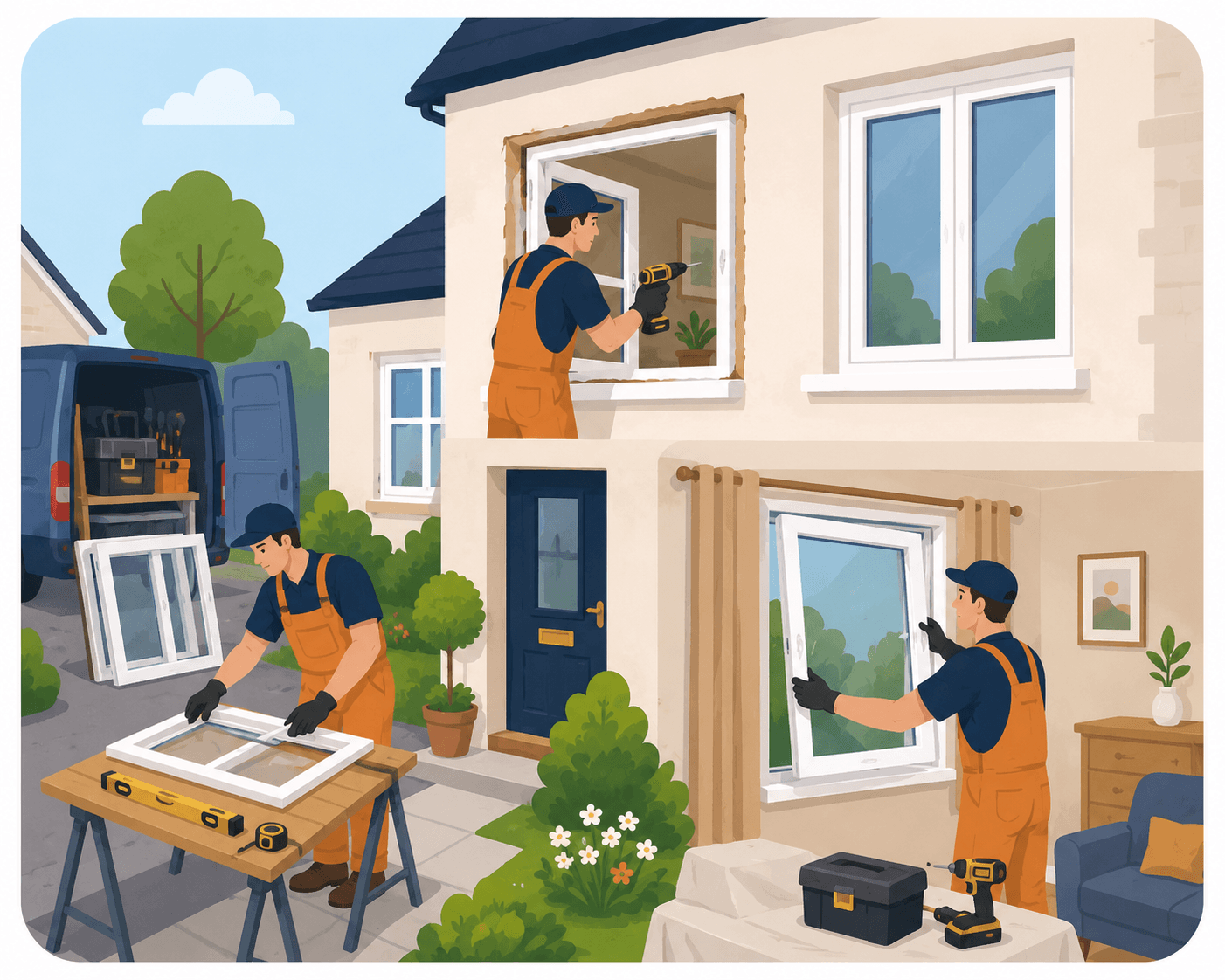
Replacing your windows is one of the most effective ways to cut heat loss, reduce your energy bills and make your home more comfortable all year round. If you have never had windows fitted before, the process can feel like a mystery — so here is exactly what to expect, step by step.
Why upgrade your windows?
Older single-glazed and early double-glazed windows let a surprising amount of heat escape. Modern energy-efficient windows trap warmth inside your home, keeping rooms cosier and reducing how hard your heating has to work.
- Lower heating bills thanks to better insulation
- Fewer draughts and cold spots near windows
- Less outside noise coming in
- Reduced condensation on the glass
Before installation day
A surveyor will visit to take precise measurements and talk through your options — frame material, glazing and finish. Your new windows are then made to measure, which usually takes a few weeks. Nothing is fitted until your bespoke units are ready.
Not sure which upgrade is right?
Answer a few quick questions and we will tell you which energy-saving improvements could help — and whether you qualify for funding.
What happens on installation day
On the day, the fitting team will protect your floors and furniture before carefully removing your old windows. They then fit the new frames, seal them against the weather and make sure everything opens, closes and locks smoothly.
- Old windows removed and the opening prepared
- New frames fitted, levelled and secured
- Gaps sealed and insulated against draughts
- Everything tested, cleaned and tidied away
How long does it take?
Most homes are completed in a single day, though larger properties or bay windows can take a little longer. Your installer will give you a clear timescale before work begins so there are no surprises.
After your new windows are fitted
Once everything is in place, the team will walk you through how to operate and maintain your new windows and clear up any mess. You should notice the difference in comfort straight away — and in your energy bills over the following months.