Solar panels can be a great way to generate your own electricity and reduce how much energy you buy from the grid. But one common question homeowners ask is whether it is worth adding battery storage as well.
A solar battery allows you to store electricity generated by your solar panels so you can use it later, rather than sending unused energy straight back to the grid. This can be useful in the evening, overnight, or during periods when your panels are not generating enough electricity for your home.
For some households, a battery can make solar panels more useful and improve long-term savings. For others, the extra upfront cost may mean it is better to start with solar panels first and consider a battery later.
This guide explains how solar battery storage works, what to think about before adding one, and when it may or may not be worth it.
How Do Solar Panels Work Without a Battery?
Solar panels generate electricity during daylight hours. That electricity is used by your home first, helping to power appliances, lighting, devices and other electrical systems.
If your solar panels generate more electricity than your home is using at that moment, the excess electricity usually goes back to the grid. Under the Smart Export Guarantee, often called SEG, eligible households can be paid for renewable electricity they export to the grid.
Without a battery, the basic pattern is:
- Your solar panels generate electricity during the day
- Your home uses what it needs at the time
- Any unused electricity is exported to the grid
- You buy electricity from the grid when your panels are not generating enough
This setup can still be worthwhile, especially for households that use a lot of electricity during the day.
What Does a Solar Battery Do?
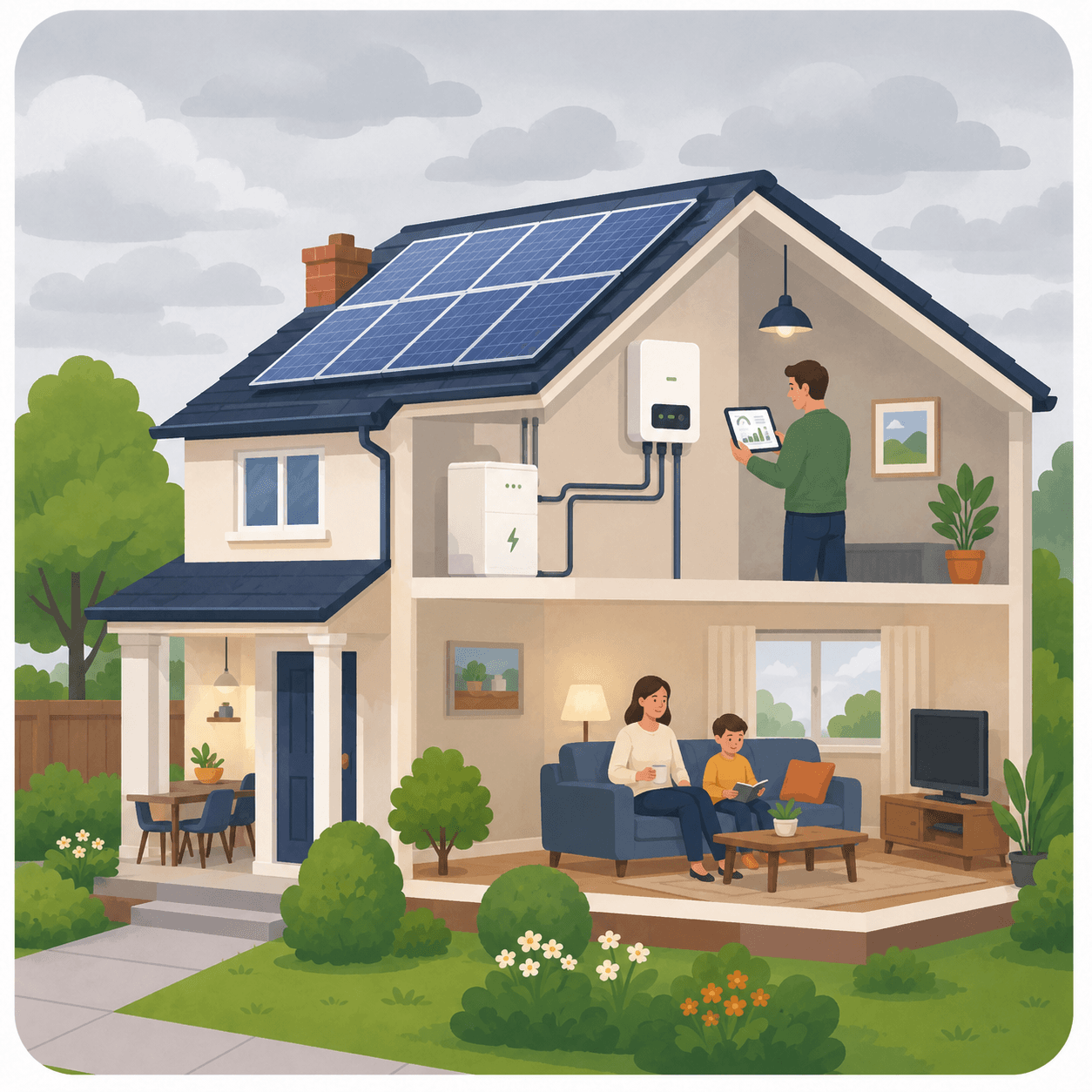
A solar battery stores the electricity your panels generate but your home does not immediately use. You can then use that stored electricity later, such as in the evening when people are home, lights are on, appliances are running and the panels are producing little or no power.
In simple terms, a battery helps you use more of your own solar electricity.
With a battery, the pattern usually becomes:
- Your solar panels generate electricity
- Your home uses what it needs first
- Extra electricity charges the battery
- Once the battery is full, excess electricity can be exported
- Later, your home uses stored battery power before buying from the grid
This can reduce reliance on grid electricity and help you get more value from the electricity your solar panels produce.
Why Homeowners Consider Battery Storage
The main reason people add a battery is to make better use of their solar panels.
Many homes generate solar electricity during the day, but household electricity use often rises in the morning and evening. If nobody is home during the day, a lot of the electricity generated may be exported rather than used directly.
A battery can help by storing some of that daytime generation for later.
Potential benefits include:
- Using more of the electricity your solar panels generate
- Buying less electricity from the grid
- Having more control over your home energy use
- Making better use of smart tariffs, where suitable
- Reducing waste from unused solar generation
- Supporting a lower-carbon home
- Improving the value of a solar panel system for households with higher evening use
Energy Saving Trust says battery storage can reduce reliance on the grid and may also work with time-of-use tariffs, allowing households to charge the battery when electricity is cheaper and use that stored energy later.
How Much Does Battery Storage Cost?
The cost of battery storage depends on the type, size and installation requirements.
Energy Saving Trust says battery storage can range from around £1,500 to £10,000, with the cost of a 5kWh battery system around £4,600. It also notes that installing a battery at the same time as solar panels may save money because installers are already on site and can integrate everything as part of the same job.
MoneySavingExpert gives a similar broad picture, stating that solar batteries vary depending on capacity and type, with a standard battery system typically around £5,000, although cheaper and more expensive options exist.
The final cost can depend on:
- Battery size
- Battery brand
- Whether it is installed with new solar panels
- Whether it is added to an existing system
- Inverter requirements
- Electrical work needed
- Where the battery will be installed
- Whether backup power functionality is included
Because costs can vary, it is sensible to compare quotes and make sure you understand exactly what is included.
How Long Does a Solar Battery Last?
Solar batteries do not usually last as long as solar panels. Energy Saving Trust says the typical lifespan of battery storage is around 10 to 12 years, although this can vary depending on the battery and how it is used.
MoneySavingExpert gives a broader estimate, saying solar battery lifespans can range from five to 15 years depending on the system.
This matters because a battery may need replacing before your solar panels do. When deciding whether battery storage is worth it, it is important to think about the whole lifetime cost, not just the initial installation price.
Before choosing a battery, ask about:
- Product warranty
- Installation warranty
- Expected lifespan
- Usable capacity
- Battery cycles
- Maintenance requirements
- Whether the battery can be expanded later
Is Battery Storage Worth It Financially?
Battery storage can be worth it for many homes, but it is not automatically the best choice for everyone.
A battery is more likely to make financial sense if you generate more solar electricity than you can use during the day and you regularly use electricity in the evening or overnight. This means the stored energy can replace electricity you would otherwise buy from the grid.
It may be especially useful if:
- You are out during the day
- Your electricity use is higher in the evening
- You have a larger solar panel system
- You want to reduce grid electricity use
- You are on, or could benefit from, a smart time-of-use tariff
- You have an electric vehicle or heat pump
- You want to plan for future energy needs
Energy Saving Trust notes that homes with higher electricity demand, including larger households or homes with electric heating such as heat pumps, are likely to benefit from a larger battery.
However, if your household already uses most of its solar electricity during the day, the additional savings from a battery may be smaller.
Battery Storage vs Exporting Electricity
One of the key decisions is whether you are better off storing electricity or exporting it.
Under the Smart Export Guarantee, you can be paid for electricity you export to the grid, but you are not paid for electricity you use yourself. GOV.UK explains that under SEG, you are paid for every unit of electricity you feed back to the grid, while the electricity you use yourself saves money by reducing what you import from the grid.
In many cases, using your own solar electricity can be more valuable than exporting it, because the price you pay to buy electricity from the grid is often higher than the price you receive for exporting electricity. However, export tariffs vary, and some may be more attractive than others.
GOV.UK also notes that SEG tariff suppliers set their own terms, and tariffs can change over time, so homeowners should check they remain on a competitive tariff.
A battery can reduce exports by storing more electricity for later use. That may be beneficial, but it should be compared against the income you could receive from exporting.
Can a Battery Work with the Smart Export Guarantee?
Yes, in some cases.
GOV.UK says that if you have a storage device, such as a household battery or electric vehicle, that can import and export electricity, it could also be used to benefit from the Smart Export Guarantee. Your SEG supplier can advise how this works.
This is important because different suppliers may treat battery exports differently. Some tariffs may only pay for renewable electricity exported from your solar panels, while others may have specific rules around stored electricity.
Before signing up, check:
- Whether battery exports are accepted
- Whether the tariff pays for all exported electricity
- Whether you need a smart meter
- Whether your installation needs MCS or equivalent certification
- Whether you can use a different SEG supplier from your normal energy supplier
GOV.UK says SEG applicants need a meter capable of half-hourly export readings, typically a smart meter, and an installation certified through MCS or an equivalent accredited scheme.
Can You Charge a Battery from the Grid?
Some batteries can be charged from the grid as well as from solar panels.
This can be useful if you are on a time-of-use tariff where electricity is cheaper at certain times, often overnight. Energy Saving Trust says a battery can be set to charge when electricity is cheapest, as well as storing excess solar power generated during the day.
This can make a battery more useful in winter, when solar panels usually generate less electricity than in summer. Energy Saving Trust also notes that solar panel generation varies by season and that solar panels generate more in summer than in winter.
A grid-charging battery may be useful if:
- You have a suitable smart tariff
- Your home uses a lot of electricity in peak periods
- You have an electric vehicle
- You use a heat pump
- Your solar generation is lower in winter
- You want more flexibility over when you buy electricity
However, smart tariffs and battery settings can be more complex, so it is worth making sure you understand how the system will be managed.
What Size Battery Do You Need?
The right battery size depends on your home, your solar panel system and how you use electricity.
A larger battery is not always better. If the battery is too small, it may fill up quickly and not store enough for your evening use. If it is too large, you may pay for capacity you rarely use.
Energy Saving Trust says battery size depends mainly on how much electricity your home uses, when you use it, how much excess electricity your solar panels produce, and whether you plan to top up the battery from the grid using a time-of-use tariff.
Things to consider include:
- Your average daily electricity use
- When your household uses most electricity
- Solar panel system size
- Whether anyone is home during the day
- Evening and overnight electricity use
- Whether you have an EV charger
- Whether you have or plan to install a heat pump
- Whether you want backup power
- Your budget
A good installer should review your energy usage rather than simply recommending the largest battery available.
Where Can a Battery Be Installed?
Battery location depends on the product, property and installation requirements.
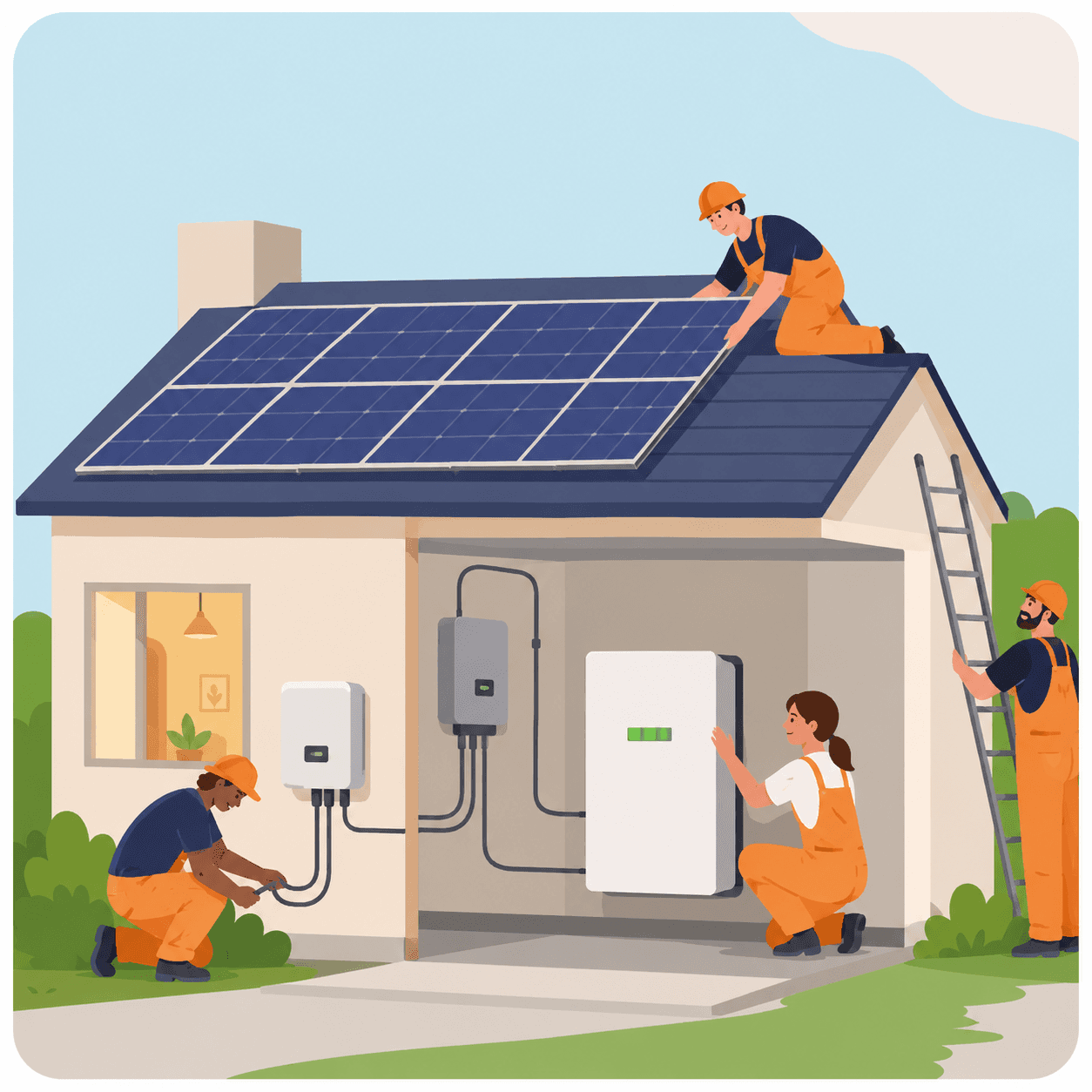
Energy Saving Trust says a battery can be installed in places such as garages, utility rooms or on external walls, depending on the battery chosen.
The location should be practical, safe and suitable for the equipment. Your installer should check things such as ventilation, weather protection, access, electrical connections and manufacturer requirements.
Common locations include:
- Garage
- Utility room
- Plant room
- External wall
- Outbuilding, if suitable
- Loft space only where the product and conditions allow
Battery storage should always be installed by an experienced professional.
When Adding a Battery May Be a Good Idea
Battery storage may be worth considering if your household wants to get more value from solar panels and use less electricity from the grid.
It may be a good fit if:
- You already have solar panels and export a lot of electricity
- You are installing solar panels and want a complete system from the start
- You use more electricity in the evening than during the day
- Your home has high electricity demand
- You are planning an electric vehicle or heat pump
- You are interested in smart tariffs
- You want to reduce reliance on grid electricity
- You have suitable space for a battery
- The payback period makes sense for your circumstances
For households across the North West, where weather and seasonal daylight can vary, battery storage may help make better use of solar energy when it is available, especially for homes with higher evening electricity use.
When It May Not Be Worth Adding a Battery
A battery may not be the right choice for every home.
It may be less worthwhile if:
- You are at home during the day and already use most of your solar electricity directly
- Your solar panel system is small and produces little surplus electricity
- Your evening electricity use is low
- You do not have suitable space for a battery
- The upfront cost is too high
- You can get a good export tariff and prefer to export surplus electricity
- You are not planning to stay in the property long enough to benefit
- Your existing solar system would need expensive upgrades to add a battery
Energy Saving Trust notes that upfront cost can make batteries unrealistic for some homes, and that battery storage is less efficient than using electricity directly from solar panels because some energy is lost when electricity is stored and discharged.
This is why the decision should be based on your actual usage, not just the general idea that “more storage is always better.”
Should You Add a Battery Now or Later?
If you are installing solar panels for the first time, adding a battery at the same time can sometimes be more cost-effective because the system can be designed together and installers are already on site. Energy Saving Trust says households may be able to save money by installing battery storage at the same time as solar panels.
However, adding a battery later can also make sense if you want to see how your solar panels perform first. After a year of solar generation and electricity usage data, you may have a clearer idea of how much surplus electricity you produce and whether storage would be worthwhile.
Adding later may suit you if:
- You are unsure about the extra cost
- You want to monitor your solar usage first
- You expect battery prices or tariffs to change
- Your current budget is focused on solar panels only
- You want to prioritise insulation, heating or other home upgrades first
If you think you might add a battery later, ask your installer whether the solar system can be designed to make future battery installation easier.
Questions to Ask Before Adding Battery Storage
Before choosing a solar battery, it is worth asking:
- How much electricity do I currently use each day?
- When do I use most of my electricity?
- How much solar electricity am I likely to export?
- What battery size is being recommended and why?
- Is the battery compatible with my solar panels and inverter?
- Can the battery charge from the grid?
- Can I use a time-of-use tariff?
- Will I still receive SEG export payments?
- How long is the warranty?
- What is the expected lifespan?
- Where will the battery be installed?
- What happens if I want to add more storage later?
- Is backup power included or available as an option?
Clear answers will help you compare systems properly.
Final Thoughts
So, is it worth adding a battery to solar panels?
For many households, battery storage can be a useful addition. It allows you to store more of the electricity your solar panels generate, use it later, and reduce how much electricity you buy from the grid. It may be especially helpful for homes with higher evening use, electric vehicles, heat pumps or access to smart tariffs.
However, a battery is not automatically the best choice for every property. The upfront cost, battery lifespan, available space, solar generation, export tariff and household usage patterns all matter.
The most sensible approach is to look at your home’s actual electricity use and your long-term plans. Solar panels on their own may be enough for some households, while others may benefit from adding battery storage either now or in the future.
At Warmr, we help homeowners understand their options for energy-efficient home upgrades, including solar panels, battery storage, heating improvements and insulation. The right decision starts with clear advice based on your property, your energy use and what you want to achieve.