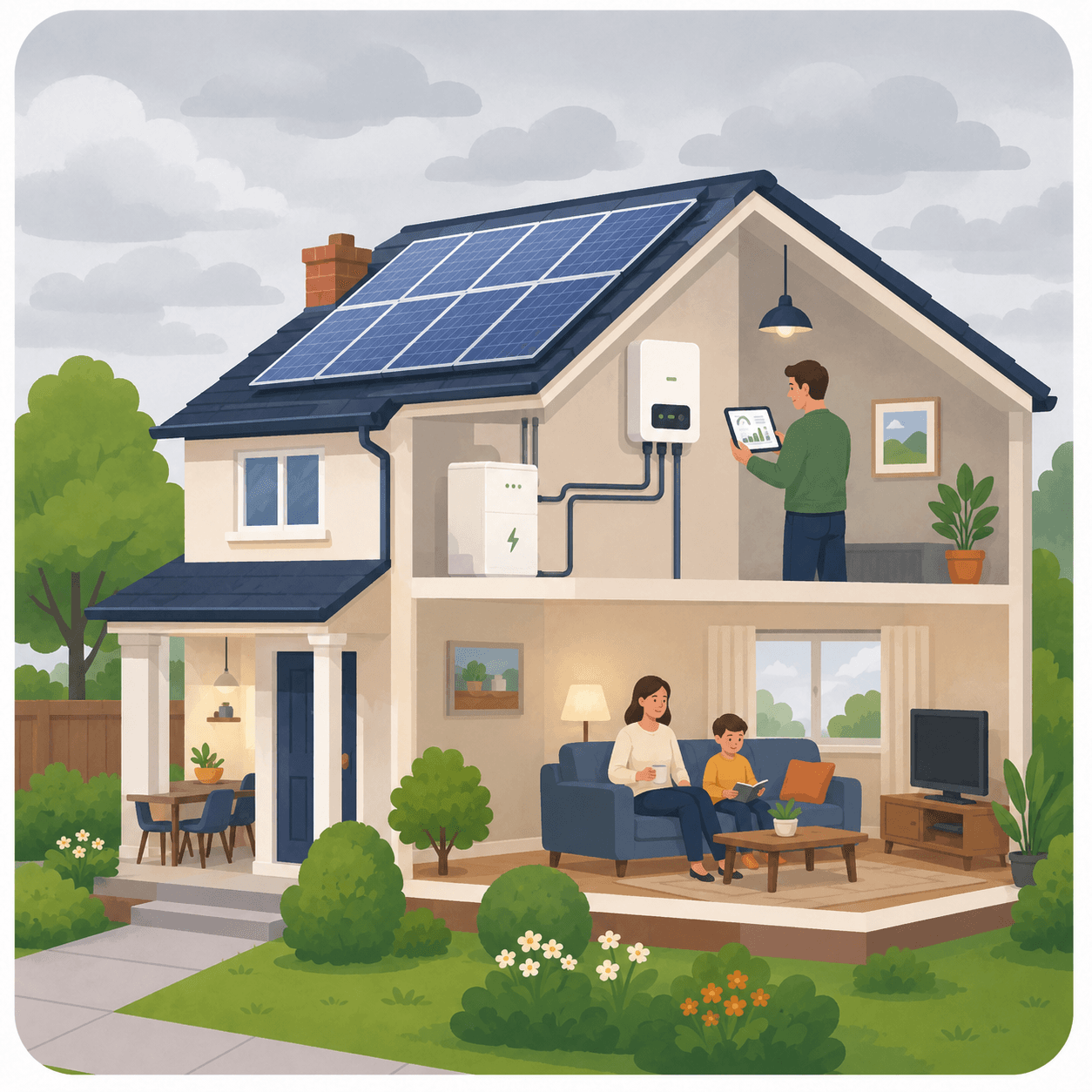
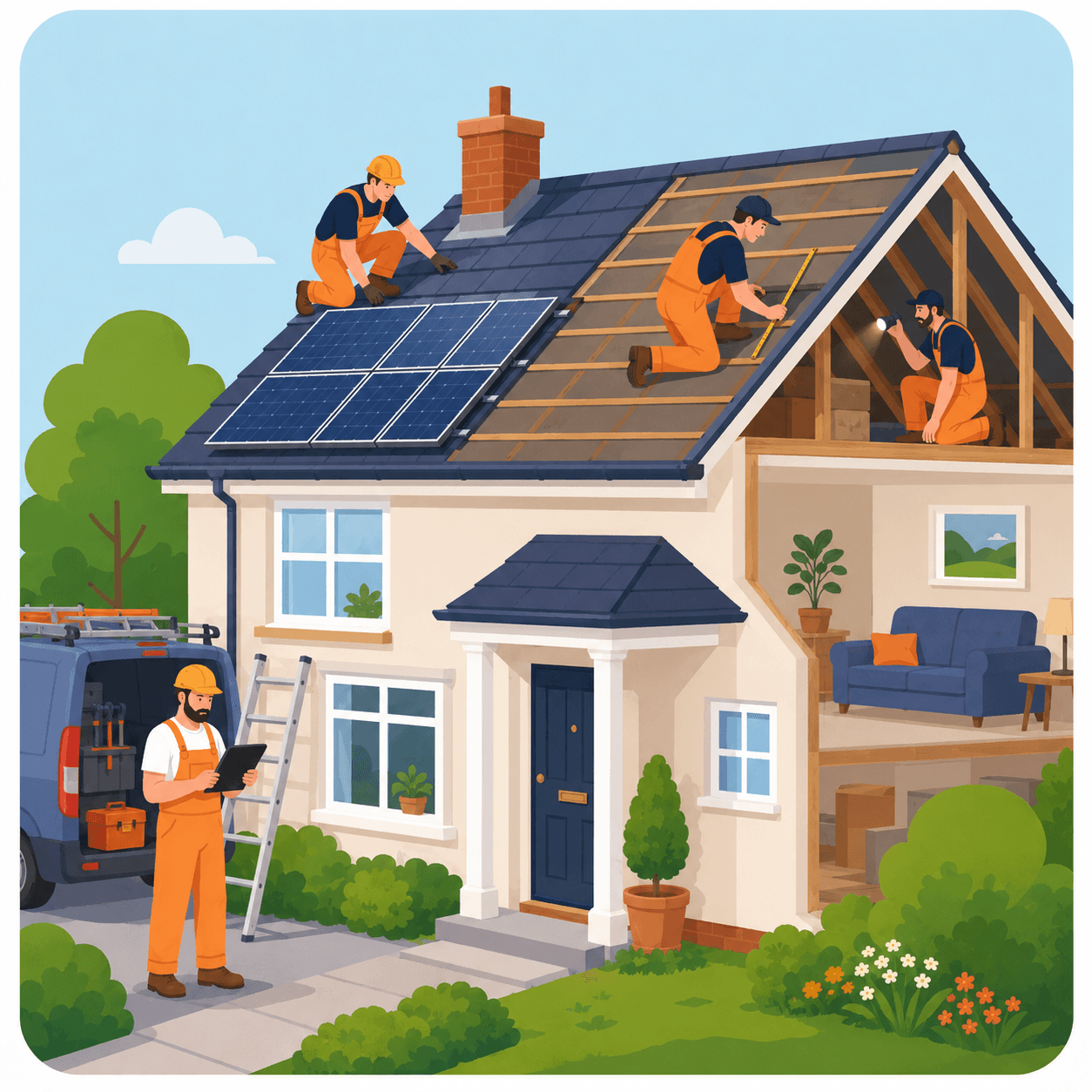
Solar panels can be a useful way to generate electricity at home and reduce how much power you need to buy from the grid. But before panels are fitted, there is one part of the property that needs careful attention: the roof.
A solar panel system is designed to last for many years, so it makes sense to check whether your roof is in suitable condition before installation. If the roof is old, damaged, leaking or likely to need major repair soon, it may be better to deal with those issues first.
This does not mean every roof needs to be perfect. Many homes are suitable for solar panels. But a good installation starts with a proper look at the roof, not just the panels.
This guide explains what homeowners should check before installing solar panels.
Why Roof Condition Matters Before Installing Solar Panels
Solar panels are fitted to the roof using a mounting system. That system needs to be securely attached, weatherproof and suitable for the roof structure.
If the roof is already in poor condition, adding solar panels can create problems later. For example, if tiles need replacing after the panels are installed, the system may have to be partially removed to carry out the repair. That can add cost, time and disruption.
A roof condition check helps answer three key questions:
- Is the roof strong enough for the solar panel system?
- Is the roof covering in good enough condition?
- Is the roof likely to need repair or replacement soon?
If the answer to any of these is unclear, a roof survey or further inspection may be needed before installation goes ahead.
Start with the Age of the Roof
The age of the roof is a useful starting point.
A newer roof in good condition is usually easier to assess for solar panels. An older roof may still be suitable, but it needs closer checking.
You do not always need to know the exact age, but it helps to think about:
- When the roof was last replaced
- Whether any major repairs have been done
- Whether the roof covering is original
- Whether there have been leaks in recent years
- Whether the roof has sagged, moved or deteriorated
- Whether the property has had extensions or roof alterations
If a roof is nearing the end of its expected life, it may be sensible to repair or renew it before installing solar panels.
This can be more efficient than fitting panels now and removing them later for roof work.
Check for Broken, Missing or Slipped Tiles
Tiles or slates should be checked before solar panels are installed.
Common issues include:
- Cracked tiles
- Missing tiles
- Slipped slates
- Loose ridge tiles
- Damaged verge tiles
- Poor previous repairs
- Moss lifting or disturbing roof coverings
- Tiles that are brittle or easily broken
Solar panels are not usually fixed directly to the tiles themselves. Installers normally use roof hooks or brackets attached to the roof structure below. However, the tiles still need to be in good condition because they form the weatherproof outer layer of the roof.
If tiles are damaged or loose, they should usually be repaired before installation.
Look for Signs of Leaks
A roof leak should be dealt with before solar panels are fitted.
Signs of a leak can include:
- Damp patches on ceilings
- Water stains in the loft
- Mould or musty smells
- Rotting roof timbers
- Drips during heavy rain
- Damaged insulation in the loft
- Daylight visible through the roof
- Staining around chimneys or roof valleys
A small leak may seem minor, but once panels are installed, roof access can become more complicated.
Solar panels should not be used to cover up an existing roof problem. The cause of the leak should be found and repaired first.
Check the Loft from Inside
The loft can reveal a lot about the condition of the roof.
Where it is safe to access the loft, useful things to look for include:
- Damp timbers
- Water marks
- Sagging rafters
- Damaged felt or membrane
- Daylight coming through gaps
- Signs of rot
- Pest damage
- Condensation
- Previous patch repairs
- Poor ventilation
The loft structure also gives clues about whether the roof is suitable for the extra load of a solar panel system.
Homeowners do not need to assess this alone. A solar installer, roofer or surveyor can inspect the roof structure if there are concerns.
Structural Strength Matters
Solar panels add extra weight to the roof. The mounting rails, brackets and panels all become part of the load the roof has to carry.
For many standard homes, this is not a problem. But the structure should still be checked, especially if the roof is older, has been altered, or shows signs of movement.
Structural checks may consider:
- Rafter condition
- Roof spread or sagging
- Previous structural alterations
- Age and type of roof timbers
- Tile or slate weight
- Additional load from solar panels
- Wind loading
- Roof pitch
- Fixing points for the mounting system
If there is any doubt, a structural assessment may be recommended.
This is particularly important for older homes, flat roofs, roofs with unusual construction, or properties that have already had several alterations.
Check the Roof Pitch
Roof pitch means the angle of the roof.
Solar panels can be installed on a range of roof pitches, but the angle affects performance, fixing method and access.
A standard pitched roof is often suitable, provided there is enough usable space and the roof is in good condition. Flat roofs can also work, but they usually need a different mounting system to set the panels at the right angle and secure them properly.
Roof pitch affects:
- Solar generation
- Mounting system choice
- Wind loading
- Visual appearance
- Access during installation
- Water run-off
- Planning considerations on some properties
The installer should design the system around the actual roof, not assume every roof can be treated the same way.
Check Roof Direction
Roof direction affects how much electricity solar panels are likely to generate.
A south-facing roof is often ideal because it receives strong daylight across the day. However, east and west-facing roofs can still be suitable. East-facing panels generate more in the morning, while west-facing panels generate more later in the day.
A solar survey should look at:
- Which way the roof faces
- How much usable roof space is available
- Whether panels can be split across roof sections
- Whether the layout matches household energy use
- Whether shading affects one side more than another
Roof direction does not usually affect whether the roof is physically strong enough, but it does affect whether solar panels are likely to perform well.
Check for Shading
Shading is one of the most important performance checks.
Even if the roof itself is in good condition, heavy shading can reduce solar generation. Shading can come from several sources.
Common causes include:
- Chimneys
- Trees
- Dormer windows
- Roof windows
- Neighbouring buildings
- Aerials or satellite dishes
- Nearby walls
- Hills or tall structures
- Other sections of the roof
Shading changes through the day and across the year. A tree that does not cause much shade in summer may cast a longer shadow in winter when the sun is lower.
A good installer should assess shading before designing the system.
In some cases, the layout can be adjusted to avoid shaded areas. In other cases, optimisers or microinverters may help reduce the impact of partial shading.
Check Chimneys, Dormers and Roof Windows
Roof features can affect how many panels can be installed and where they can go.
Important features include:
- Chimneys
- Dormer windows
- Skylights
- Roof vents
- Soil vent pipes
- Flues
- Aerials
- Satellite dishes
- Firewalls or parapets
- Valleys and hips
These features can reduce usable roof space or create shading. They may also affect cable routes, panel layout and safe access for installation.
A roof with several features may still be suitable, but the design needs to work around them carefully.
Check the Condition of Chimneys and Flashing
Chimneys and flashing are common sources of roof leaks.
Before installing solar panels, it is worth checking whether any nearby chimney stack or flashing needs repair.
Look for signs such as:
- Cracked mortar
- Loose brickwork
- Damaged lead flashing
- Water staining near the chimney
- Vegetation growing from brickwork
- Leaning chimney stack
- Missing chimney pots
- Poor previous repairs
If chimney repairs are needed, it may be easier to complete them before solar panels are fitted.
Check Gutters, Fascias and Roof Edges
Solar panels sit on the main roof surface, but the edges of the roof still matter.
Gutters, fascias, soffits and roof edges should be checked because installers may need safe access around these areas.
Issues to look for include:
- Blocked gutters
- Leaking gutters
- Rotting fascias
- Damaged soffits
- Loose verge details
- Poor rainwater drainage
- Overflowing downpipes
- Moss or debris build-up
Good rainwater management helps protect the roof and walls. If water is already spilling onto the property, it should be fixed before adding more equipment to the roof.
Check for Moss and Debris
Moss is common on many roofs, especially in damp or shaded areas.
A small amount of moss does not always mean solar panels cannot be installed. But heavy moss growth may indicate that the roof needs attention.
Moss can:
- Lift or disturb tiles
- Hold moisture against the roof surface
- Block gutters
- Hide damaged tiles
- Make roof access more slippery
- Indicate a shaded, damp roof area
If the roof has heavy moss or debris, ask whether it should be cleaned or inspected before installation.
Cleaning should be carried out carefully. Aggressive cleaning methods can damage some roof coverings.
Check Whether the Roof Needs Repairs Soon
One of the most practical questions is whether roof repairs are likely in the near future.
It may be better to complete roof work before solar installation if:
- Tiles are nearing the end of their life
- The roof has regular leaks
- The felt or membrane is failing
- Flashing needs repair
- Chimney work is needed
- Fascias or gutters need replacing
- The roof is sagging
- The roof covering is brittle
- A flat roof covering is due for renewal
Solar panels can last for many years, so it makes sense for the roof underneath to be ready too.
What About Flat Roofs?
Flat roofs can be suitable for solar panels, but they need a different assessment from pitched roofs.
A flat roof system may use angled frames, ballast or specialist fixings. The design needs to consider both the weight of the system and wind exposure.
Flat roof checks may include:
- Roof covering condition
- Age of the waterproof membrane
- Ponding water
- Drainage
- Structural load capacity
- Wind loading
- Edge distances
- Access for maintenance
- Planning considerations
- Whether the roof is due for replacement
If a flat roof covering is old or already showing signs of failure, it is usually worth dealing with that before installing panels.
What About Older Homes?
Older homes can often have solar panels, but they may need more careful checking.
Older properties may have:
- Original roof timbers
- Older slate or tile coverings
- Uneven roof lines
- Previous repairs
- Lime mortar or traditional materials
- Chimneys needing attention
- Conservation restrictions
- Solid walls and older structural details
- Limited loft access
Across areas such as the North West, there are many Victorian terraces, older semis, cottages and post-war homes with different roof types and conditions.
A good survey should consider the age and construction of the property, not just the available roof area.
What About Newer Homes?
Newer homes may still need roof checks.
A newer roof is not automatically suitable for solar panels without assessment. The installer still needs to check the roof type, available space, orientation, shading, access and electrical setup.
In some newer homes, roof space may be affected by:
- Dormers
- Roof vents
- Small roof sections
- Complex roof shapes
- Estate design restrictions
- Loft conversions
- Nearby buildings causing shade
A newer roof may be in good condition, but the system still needs a proper design.
Roof Access and Scaffolding
Safe access is part of a good installation.
Most solar panel installations need scaffolding or another safe access method. This allows installers to move panels, work at height and fit mounting equipment properly.
Roof access can be affected by:
- Height of the property
- Narrow side passages
- Conservatories
- Extensions
- Porches
- Sloping ground
- Shared driveways
- Garden structures
- Overhead cables
- Difficult roof shapes
A good installer should plan access before installation day, not make it up as they go along.
Where Will the Cables Go?
Solar panels need cable routes from the roof to the inverter and electrical system.
This may involve running cables:
- Through the loft
- Down an internal wall
- Through a garage or utility room
- Down an external wall in conduit
- To a cupboard or plant area
- To a battery system, if fitted
- To the consumer unit
Cable routes should be neat, safe and practical. A roof survey should consider how cables will leave the roof without creating weatherproofing issues.
Where Will the Inverter Go?
The inverter is an important part of the solar PV system. It converts the electricity generated by the panels into electricity the home can use.
Common inverter locations include:
- Loft
- Garage
- Utility room
- Plant room
- Suitable cupboard
- External wall, if the inverter is rated for outdoor use
The location needs to be accessible, ventilated and suitable for the equipment.
If battery storage is included, the inverter and battery locations should be planned together.
Roof Condition and Battery Storage
Battery storage does not usually sit on the roof, but it is still part of the overall system design.
If you are considering solar panels with a battery, the installer will need to assess both roof suitability and battery location.
Battery location should consider:
- Space
- Access
- Ventilation
- Temperature
- Electrical cable routes
- Manufacturer requirements
- Weight
- Fire safety considerations
- Maintenance access
The roof may be suitable for panels, but the home still needs a suitable place for the rest of the system.
Planning Permission and Roof Appearance
Many domestic solar panel installations can be carried out under permitted development, but there are limits and exceptions.
Planning considerations may apply if:
- The property is listed
- The property is in a conservation area
- The roof faces a highway in a protected area
- The panels would project too far from the roof
- The system is ground-mounted
- Panels are being installed on an outbuilding
- The property is a flat or maisonette
- There are local restrictions
Planning rules are not only about whether panels are allowed. They can also affect where panels are placed and how visible they are.
It is worth checking before installation, especially for older or protected properties.
Building Regulations and Electrical Safety
Solar panel installation is not only a roof job. It also involves structural and electrical considerations.
The roof must be suitable for the additional load, and the electrical system must be installed safely.
Important areas include:
- Structural safety
- Weatherproofing
- Electrical safety
- Cable protection
- Fire safety considerations
- Inverter installation
- Isolation switches
- Labelling
- Testing and certification
A good installer should explain what certification and paperwork you will receive after installation.
Should You Repair the Roof Before Installing Solar Panels?
If repairs are needed, it is often better to do them first.
Roof work to consider before solar installation may include:
- Replacing broken tiles
- Repairing flashing
- Fixing leaks
- Repointing or repairing chimneys
- Clearing gutters
- Replacing failing felt or membrane
- Repairing sagging roof sections
- Renewing an old flat roof covering
- Replacing fascias or soffits if they are failing
This does not mean every small repair has to become a major roofing project. But obvious problems should be addressed before panels are installed.
What Should a Solar Roof Survey Include?
A proper solar roof survey should check more than just the direction of the roof.
It should consider:
- Roof condition
- Roof structure
- Roof age
- Roof covering type
- Tile or slate condition
- Signs of leaks
- Chimneys and flashing
- Gutters and roof edges
- Roof pitch
- Roof orientation
- Shading
- Available roof area
- Access for installation
- Cable routes
- Inverter location
- Battery location, if included
- Planning considerations
- Electrical connection
The aim is to make sure the system is suitable, safe and practical before any panels are fitted.
Questions to Ask Before Installing Solar Panels
Before agreeing to solar installation, ask:
- Is my roof in good enough condition?
- Does the roof need repairs first?
- Has the roof structure been checked?
- Are any tiles, slates or flashings damaged?
- Is there any sign of a leak?
- Will scaffolding be needed?
- How will the panels be fixed to the roof?
- How will the roof remain weatherproof?
- Where will cables enter the property?
- Where will the inverter go?
- Will shading affect performance?
- Do I need planning permission?
- What certification will I receive?
- What happens if the roof needs repair in future?
A reliable installer should be able to explain these points clearly.
Signs Your Roof May Need Attention First
You may need roof repairs or a more detailed survey before solar installation if you notice:
- Missing or cracked tiles
- Damp patches in the loft
- Water stains on ceilings
- Sagging roof sections
- Heavy moss growth
- Damaged flashing
- Leaning or crumbling chimney
- Overflowing gutters
- A roof covering near the end of its life
- Frequent leaks
- Loose ridge tiles
- Poor previous repairs
- Visible daylight through the roof
These issues do not automatically mean solar panels are impossible. They simply mean the roof needs attention before installation.
Final Thoughts
Solar panels can be a practical energy efficiency upgrade, but the roof needs to be ready first.
Before installation, it is worth checking the roof covering, structure, age, shading, access, cable routes and any signs of damage. If repairs are needed, it is usually better to complete them before the panels are fitted.
A good solar installation should protect the roof as well as generate electricity. That starts with a proper survey and a clear understanding of the property.
At Warmr, we help homeowners understand practical energy-efficient upgrades, including solar panels, battery storage, insulation, heating improvements and wider home efficiency measures. The right advice starts with checking the home itself, so any system is designed and installed properly from the beginning.