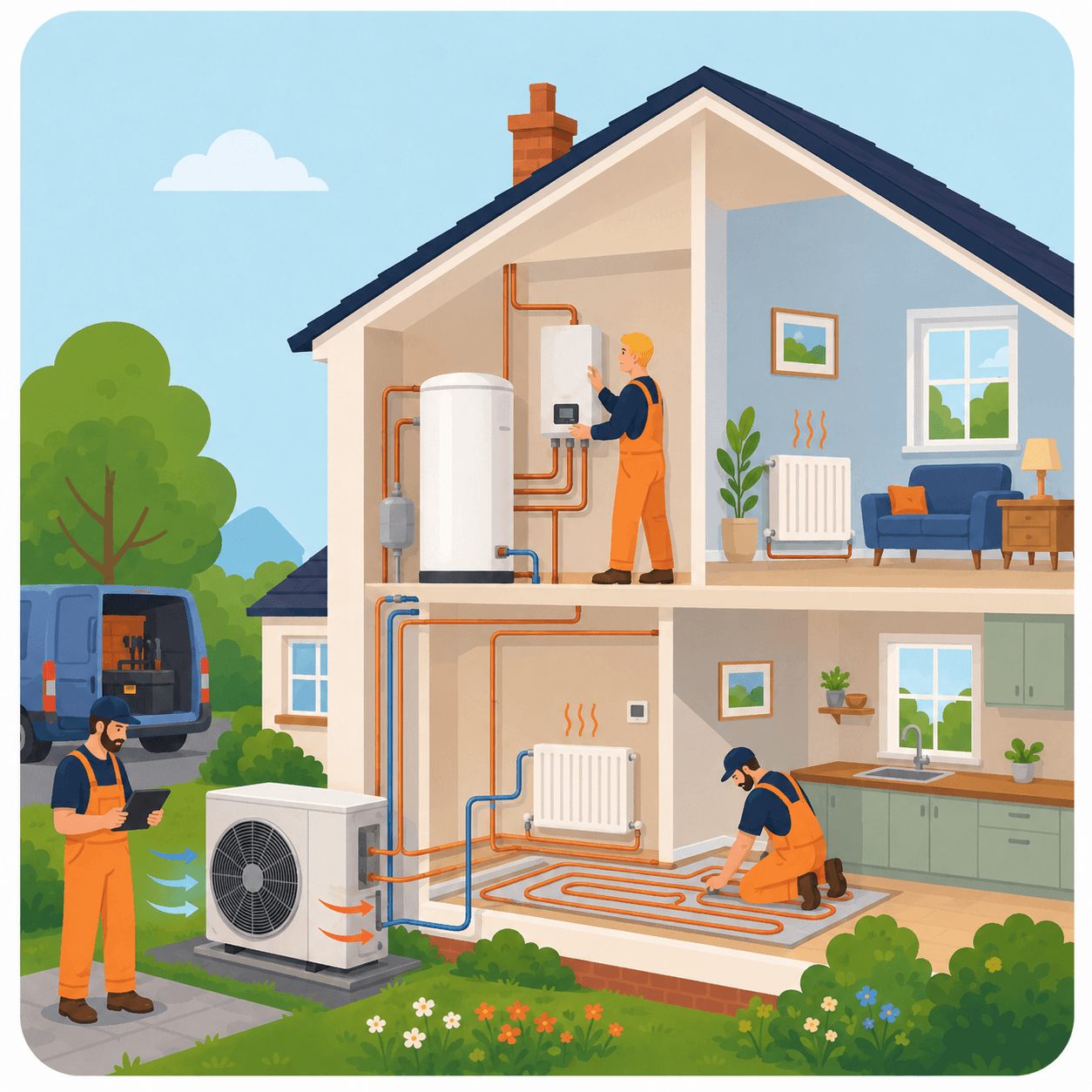
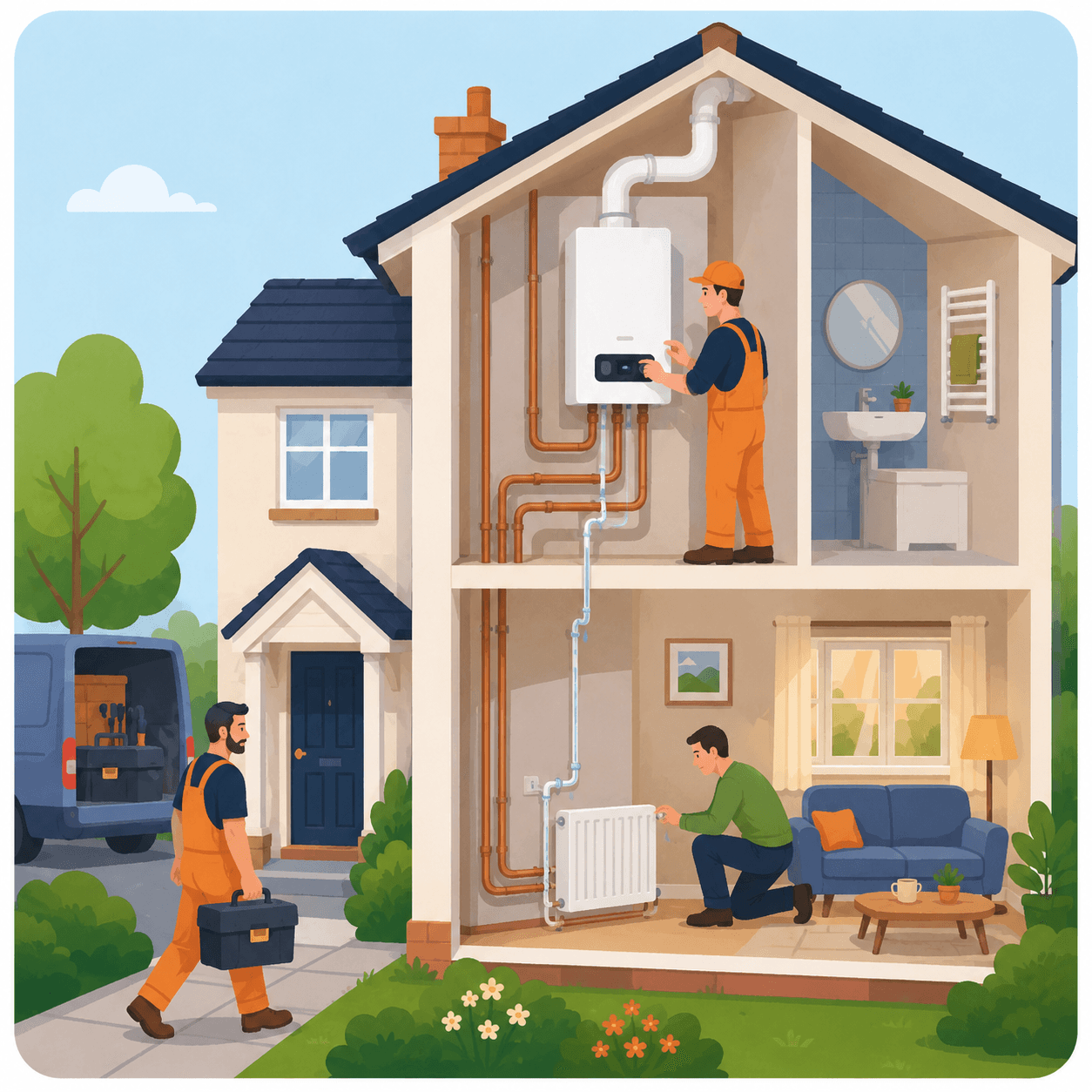
If you have looked into replacing an old boiler, you have probably come across the term condensing boiler.
Most modern gas and oil boilers are condensing boilers, but many homeowners are not exactly sure what that means. It can sound technical, but the basic idea is fairly simple: a condensing boiler is designed to recover more useful heat from the fuel it burns, instead of letting that heat escape through the flue.
This makes it more efficient than many older boiler types and can help reduce the amount of energy needed to heat your home.
This guide explains what a condensing boiler is, how it works, why it can save energy, and what helps it perform at its best.
What Is a Condensing Boiler?
A condensing boiler is a high-efficiency boiler that captures extra heat from the hot gases produced when fuel is burned.
In an older non-condensing boiler, a lot of heat is lost through the flue. The flue is the pipe that safely carries waste gases away from the boiler and out of the property.
A condensing boiler is designed to recover some of that heat before the gases leave the system. It uses this recovered heat to help warm the water that circulates around your radiators or provides hot water.
In simple terms, a condensing boiler gets more useful heat from the same amount of fuel.
Why Is It Called “Condensing”?
The name comes from the way the boiler works.
When a boiler burns gas or oil, it produces hot gases that contain water vapour. In a condensing boiler, these gases pass through a heat exchanger, where much of the heat is extracted.
As the gases cool, some of the water vapour turns into liquid. This is called condensation.
The boiler collects this liquid, known as condensate, and drains it away through a condensate pipe.
So, a condensing boiler is called “condensing” because it cools the waste gases enough to make water vapour condense, allowing the boiler to recover more heat.
How Is a Condensing Boiler Different from an Older Boiler?
The main difference is how much heat is wasted.
Older boilers can still heat a home, but they often let more heat escape through the flue. This means more fuel is needed to produce the same useful warmth.
A condensing boiler uses a more efficient heat exchanger system to capture additional heat from the flue gases. Because of this, less heat is wasted and more of the fuel’s energy is used inside the heating system.
The difference is not always obvious from the outside. A condensing boiler may look like a standard wall-mounted boiler. The key difference is inside the appliance and in how it deals with the flue gases and condensate.
How Does a Condensing Boiler Save Energy?
A condensing boiler saves energy by reducing waste.
When the boiler burns fuel, it creates heat. That heat is transferred to water, which is then sent around the heating system. The more heat the boiler can capture and use, the less fuel it needs to burn.
A condensing boiler saves energy by:
- Recovering heat from hot flue gases
- Using a high-efficiency heat exchanger
- Reducing the amount of heat lost outside
- Working well with modern heating controls
- Operating more efficiently at lower return water temperatures
- Helping the system use fuel more effectively
This does not mean every home will see the same saving. The actual benefit depends on the old boiler being replaced, how the heating system is set up, the condition of the radiators and pipework, insulation levels, and how the household uses heating.
What Is a Heat Exchanger?
The heat exchanger is one of the most important parts of a boiler.
It transfers heat from the burner to the water in the heating system. In a condensing boiler, the heat exchanger is designed to capture more heat from the combustion process, including heat that would otherwise leave through the flue.
This is one reason modern condensing boilers can be more efficient than older non-condensing models.
A clean, well-maintained heat exchanger helps the boiler work properly. If sludge, debris or poor water quality affects the system, boiler performance can suffer over time.
What Is a Condensate Pipe?
A condensing boiler produces condensate as part of its normal operation. This liquid needs to drain away safely.
The condensate pipe usually runs from the boiler to a suitable internal waste pipe or drain. In some homes, part of the condensate pipe may run outside.
This pipe is an important part of the installation. If it is poorly fitted, too narrow, incorrectly sloped or exposed to cold weather, it can cause issues. In winter, external condensate pipes can sometimes freeze, which may stop the boiler from working until the blockage is cleared.
Where possible, installers often prefer to route condensate pipework internally or protect it properly if it needs to run outside.
Do Condensing Boilers Need a Different Flue?
A condensing boiler needs a suitable flue system designed for the appliance.
Because condensing boilers cool the flue gases more than older boilers, the flue needs to deal with moisture and acidic condensate. This means older flue systems are not always suitable for a new condensing boiler.
When replacing an older boiler, the installer will check:
- Where the flue exits the property
- Whether the current flue route is suitable
- Distances from windows, doors and boundaries
- Whether a vertical or horizontal flue is needed
- Whether the flue can be safely accessed and inspected
- Whether the new boiler location works with the flue requirements
This is one reason boiler replacement is not always just a simple case of swapping one appliance for another.
Are All Modern Boilers Condensing Boilers?
In most normal replacement situations, modern domestic gas and oil boilers are condensing boilers.
If your existing boiler is very old, especially if it is a floor-standing unit, back boiler, or older wall-mounted appliance, it may not be condensing. Replacing it with a modern condensing boiler can often improve efficiency, but the installer still needs to check that the wider heating system is suitable.
The boiler itself is only one part of the system. Radiators, pipework, controls, water quality and insulation all affect how well the new boiler performs.
Condensing Boiler vs Combi Boiler: Are They the Same?
This is a common point of confusion.
A condensing boiler describes how efficiently the boiler uses fuel and recovers heat.
A combi boiler describes the type of heating and hot water system. A combi boiler provides heating and hot water directly from the boiler, without a separate hot water cylinder.
So, a boiler can be both:
A condensing boiler, because it recovers heat from flue gases
A combi boiler, because it provides hot water on demand
There are also condensing system boilers and condensing regular boilers. The right type depends on the home’s layout, hot water demand and existing system.
Types of Condensing Boilers
There are three main types of condensing boiler commonly used in homes.
Condensing Combi Boiler
A condensing combi boiler provides heating and hot water from one appliance. It heats water on demand, so there is usually no need for a separate hot water cylinder.
This can be suitable for smaller and medium-sized homes where hot water demand is not too high and space is limited.
Condensing System Boiler
A condensing system boiler works with a hot water cylinder. It can be a good option for homes with higher hot water demand, such as properties with more than one bathroom.
Because hot water is stored, multiple outlets can often be used more comfortably than with some combi systems, depending on the setup.
Condensing Regular Boiler
A condensing regular boiler, also known as a heat-only boiler, is often found in homes with traditional heating systems. It usually works with a hot water cylinder and may also have tanks in the loft.
This type may be suitable where the existing system is designed around it, although some homeowners choose to convert to a different system during replacement.
When Does a Condensing Boiler Work Most Efficiently?
A condensing boiler performs best when it can operate in condensing mode as much as possible.
This usually happens when the water returning to the boiler from the radiators is cool enough for the boiler to recover more heat from the flue gases. If the heating system always runs at very high temperatures, the boiler may not condense as effectively.
This is why system design and controls matter.
A condensing boiler can work more efficiently when:
- Radiators are correctly sized
- The heating system is balanced
- The boiler flow temperature is set appropriately
- Heating controls are used properly
- The system is clean and well maintained
- Insulation reduces the heat demand of the home
- Radiator valves and thermostats help prevent overheating
The boiler may be efficient on paper, but how it is installed and used makes a real difference.
What Is Boiler Flow Temperature?
The flow temperature is the temperature of the water leaving the boiler and travelling to the radiators.
Many boilers are set to a high flow temperature by default. This can heat radiators quickly, but it may not always be the most efficient setting for a condensing boiler.
Lower flow temperatures can help a condensing boiler recover more heat, but the home still needs to be warm enough. If the flow temperature is reduced too far, rooms may take too long to heat or may not reach the desired temperature.
The best setting depends on the property, radiator sizes, insulation and household routine. It is sensible to ask a qualified heating engineer before making major changes, especially if you are unsure how your system works.
Why Radiators Matter
Radiators affect how well a condensing boiler performs.
If radiators are too small, the system may need to run at higher temperatures to heat the home properly. If radiators are correctly sized, the boiler may be able to run at lower temperatures more often, improving efficiency.
This is especially relevant when upgrading an older boiler. The existing radiators may have been chosen many years ago, possibly before insulation improvements, extensions or layout changes.
A heating assessment may look at:
- Whether radiators are large enough for each room
- Whether the system is balanced
- Whether radiator valves work properly
- Whether some rooms heat more slowly than others
- Whether pipework is suitable
- Whether any radiators are blocked by furniture
A condensing boiler works best as part of a well-designed heating system.
Why Heating Controls Matter
Heating controls help prevent energy waste.
A modern condensing boiler should be paired with suitable controls so the home is heated when needed, not all the time.
Useful controls may include:
- Room thermostat
- Programmer or timer
- Smart thermostat
- Thermostatic radiator valves
- Hot water controls
- Weather compensation
- Load compensation
- Zoned heating controls
The right controls depend on the system and the household. A simple, easy-to-use setup is often better than a complicated one that nobody uses properly.
Good controls help the boiler respond to actual heating demand rather than running longer or hotter than necessary.
What About Boiler Modulation?
Many modern boilers can modulate. This means they can adjust their heat output up or down depending on how much heat the home needs.
Instead of always running at full power, the boiler can reduce its output when less heat is required. This can help improve comfort, reduce cycling and make the system more efficient.
For modulation to work well, the boiler needs to be appropriately sized and paired with suitable controls.
An oversized boiler may cycle on and off more often, especially in milder weather. This is one reason boiler sizing matters.
Is a Condensing Boiler Always More Efficient?
A condensing boiler is designed to be more efficient than older non-condensing models, but real-world performance depends on installation, setup and use.
A condensing boiler may not perform at its best if:
- The system is dirty or full of sludge
- Radiators are undersized
- Controls are poor or unused
- The boiler is oversized
- Flow temperature is set unnecessarily high
- The system is not balanced
- Pipework is unsuitable
- The home loses heat quickly through poor insulation
- The boiler is not serviced regularly
This is why replacing the boiler alone is not always the whole answer. The heating system and building fabric both matter.
Can a Condensing Boiler Reduce Heating Bills?
It can, especially if it replaces an old, inefficient boiler.
However, savings vary from home to home. The final impact depends on:
- The efficiency of the old boiler
- The type of new boiler installed
- Heating controls
- Radiator performance
- Insulation levels
- Fuel prices
- Household heating habits
- Maintenance and servicing
- Whether the system has been cleaned and balanced
A condensing boiler can reduce wasted energy, but it still needs to be used sensibly. Leaving the heating on too high or heating unused rooms will reduce the benefit.
Does Insulation Help a Condensing Boiler Work Better?
Yes, insulation can help any heating system perform better.
If a home loses heat quickly through the roof, walls, floors, windows or draughts, the boiler has to work harder to maintain comfort. Improving insulation can reduce heat demand, meaning the boiler may not need to run as long or as hot.
Helpful improvements may include:
- Loft insulation
- Cavity wall insulation
- Solid wall insulation
- Underfloor insulation
- Draught-proofing
- Window improvements
- Better door seals
- Loft hatch insulation
This is why a whole-home approach often makes sense. A good boiler is important, but keeping the heat inside the home is just as important.
What Maintenance Does a Condensing Boiler Need?
A condensing boiler should be serviced regularly by a qualified engineer.
Servicing helps check that the boiler is working safely and efficiently. It may include checking combustion, the flue, safety devices, seals, controls and overall operation.
The heating system itself also needs attention. Over time, sludge, air or corrosion can affect performance.
Useful maintenance steps may include:
- Annual servicing
- Checking system pressure
- Bleeding radiators when needed
- Keeping the condensate pipe protected
- Making sure controls work properly
- Checking for leaks
- Using inhibitor where appropriate
- Keeping magnetic filters clean if fitted
- Addressing unusual noises or fault codes early
A well-maintained boiler is more likely to perform efficiently and reliably.
Common Signs Your Boiler May Be Older or Less Efficient
You may have an older or less efficient boiler if:
- It is more than 10 to 15 years old
- It has a permanent pilot light
- It is floor-standing and very bulky
- It has no condensate pipe
- It breaks down regularly
- It makes unusual noises
- Radiators take a long time to heat
- Hot water performance is poor
- Replacement parts are difficult to find
- Your heating engineer has advised that it is non-condensing
These signs do not automatically mean replacement is the only option, but they are worth investigating.
Questions to Ask Before Replacing an Old Boiler
Before choosing a new condensing boiler, ask:
- What type of boiler is suitable for my home?
- Is a combi, system or regular boiler best?
- Is the boiler correctly sized for the property?
- Will existing radiators work well with it?
- Does the heating system need flushing or cleaning?
- Will a magnetic filter be fitted?
- What controls are included?
- Where will the condensate pipe run?
- Is the flue route suitable?
- Will I receive installation certification and warranty documents?
- How should I use the boiler efficiently after installation?
A good installer should explain the recommendation clearly and avoid a one-size-fits-all approach.
Final Thoughts
A condensing boiler is designed to use fuel more efficiently by recovering extra heat from flue gases that older boilers often waste. This can help reduce energy use, improve heating performance and support a more efficient home.
However, the boiler is only one part of the picture. Radiators, pipework, controls, insulation, system cleanliness and household heating habits all affect real-world performance.
If you are replacing an older boiler, it is worth looking at the whole heating system rather than just the appliance itself. The best results usually come from choosing the right boiler, installing it properly, setting it up correctly and making sure the home can hold onto heat.
At Warmr, we help homeowners understand practical energy-efficient home upgrades, including boiler replacements, insulation, heating controls and wider home efficiency measures. The right advice starts with the property, the heating system and how the home is used.