If your home does not have a proper central heating system, you may have come across the term first-time central heating.
It can sound technical, but the idea is quite simple. First-time central heating usually refers to installing a full central heating system in a property that has not had one before. This can be a major improvement for homes that currently rely on electric room heaters, gas fires, coal fires, storage heaters, or other forms of individual room heating.
For many households, especially those living in older or less efficient properties, first-time central heating can make a home feel warmer, more comfortable and easier to manage.
This guide explains what first-time central heating means, what may be involved, and what homeowners and tenants should know before arranging an assessment.
What Is First-Time Central Heating?
First-time central heating means installing a central heating system in a property that does not already have one.
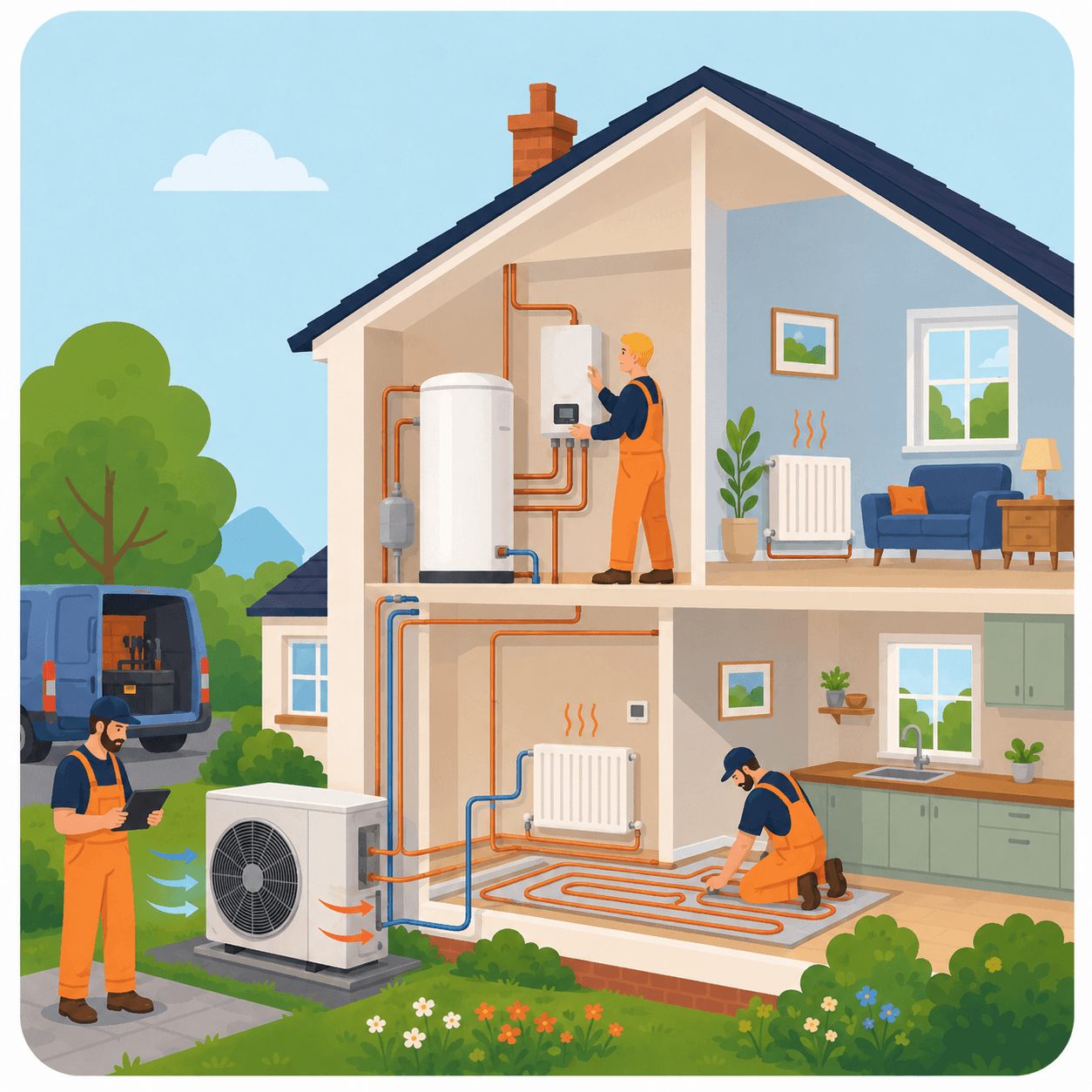
A typical central heating system may include:
- A heat source, such as a boiler or suitable low-carbon heating system
- Radiators or other heat emitters
- Pipework to move heat around the property
- Heating controls
- A thermostat
- Thermostatic radiator valves, where suitable
- Hot water controls, depending on the system
Instead of heating one room at a time, central heating is designed to distribute heat around the home from a central source. This can make day-to-day heating more convenient and help reduce cold spots.
Why Some Homes Still Do Not Have Central Heating
Many homes across the UK already have central heating, but not all do. Some older properties were built before modern systems became common, while others may have been adapted over time with individual heaters rather than a full system.
A home without central heating might rely on:
- Electric plug-in heaters
- Storage heaters
- Gas fires
- Open fires
- Solid fuel heating
- Oil heaters
- Portable heaters
- A single heat source in one room
These systems can work, but they may not heat the whole property evenly. Some rooms may stay cold, while others become too warm. This can be particularly difficult during winter or in homes with poor insulation.
Why First-Time Central Heating Can Make a Difference
A properly designed central heating system can improve how a home feels and functions. The main benefit is usually comfort: the home can be heated more evenly, and residents have more control over when and where heat is used.
Potential benefits include:
- Warmer rooms throughout the property
- More consistent heating
- Better control over heating times and temperatures
- Reduced reliance on portable heaters
- Improved comfort during colder months
- A more practical heating setup for families, older residents or vulnerable households
- Potential improvement to the home’s energy performance
Heating upgrades can also support wider energy efficiency goals. Ofgem describes the Energy Company Obligation, known as ECO, as a government energy efficiency scheme in Great Britain designed to help reduce fuel poverty and carbon emissions. Heating upgrades can form part of eligible energy efficiency work under the scheme.
What May Be Included in a First-Time Central Heating Installation?
The exact work depends on the property. A small bungalow will need a different setup from a larger terraced house or a rural property with no existing heating infrastructure.
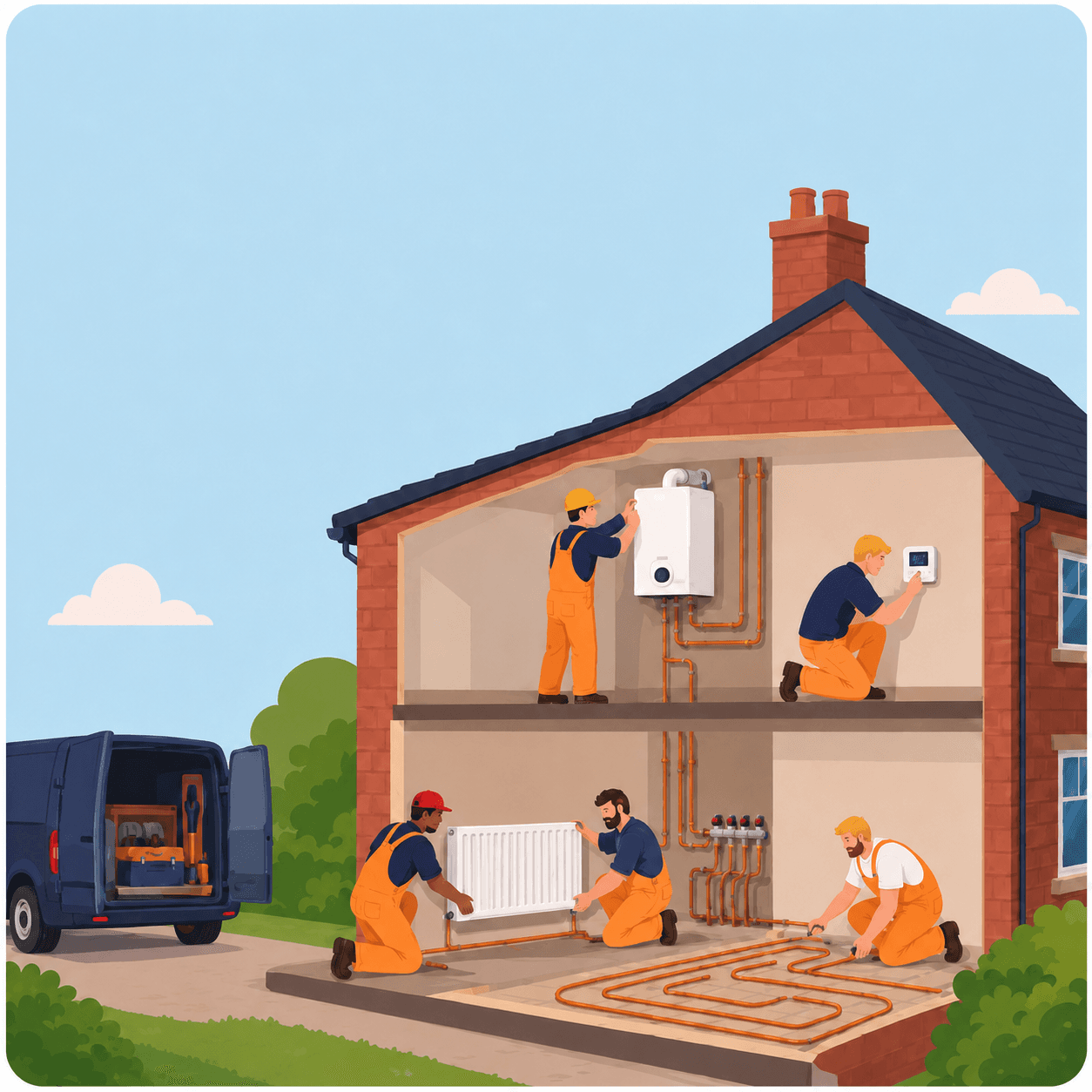
A first-time central heating installation may involve:
- Surveying the property
- Designing the heating layout
- Installing pipework
- Fitting radiators
- Installing a boiler or suitable heating system
- Adding controls and thermostats
- Testing the system
- Showing the household how to use the controls
The installer will usually look at the size of the property, number of rooms, insulation levels, existing hot water setup and how the household uses heating.
The aim is not just to install equipment, but to create a system that is suitable for the home.
Does First-Time Central Heating Always Mean a Gas Boiler?
Not always.
In many homes, first-time central heating may involve a boiler and radiators. However, the right system depends on the property, energy supply, funding route and current regulations.
Some homes may be connected to mains gas, while others may not be. In off-gas areas, other heating options may need to be considered. Low-carbon heating systems, such as heat pumps, may also be suitable in some cases, particularly where the property is well insulated.
This is why a proper assessment matters. The best heating system for one home may not be the best option for another.
Why Insulation Matters Too
Central heating can make a big difference, but it works best when the home can hold onto heat.
If a property has little insulation, heat can escape quickly through the roof, walls, floors, windows and gaps around doors. This can make the heating system work harder than it needs to.
Before or alongside first-time central heating, an assessor may look at:
- Loft insulation
- Wall insulation
- Underfloor insulation
- Draught-proofing
- Window condition
- Ventilation
- Existing damp or condensation issues
This is particularly important in older homes across areas such as the North West, where properties can vary widely in age, construction and condition.
Improving insulation first can make a heating system more effective and help the home stay warmer for longer.
Can First-Time Central Heating Improve an EPC Rating?
It may help, depending on the property.
An Energy Performance Certificate, or EPC, looks at how energy efficient a property is. Heating, insulation, hot water, windows and lighting can all influence the rating.
If a home currently relies on inefficient room-by-room heating, installing central heating may improve the property’s energy performance. However, the impact will depend on the type of system installed and whether other improvements, such as insulation or heating controls, are also made.
For the best results, first-time central heating should be considered as part of the whole home rather than as a standalone upgrade.
Who Might Be Eligible for Support?
Some households may be able to get help with installing a heating system for the first time through energy efficiency schemes, depending on their circumstances and property.
GOV.UK says the Energy Company Obligation may provide support with insulation work or replacing or repairing a boiler, and in some cases installing a heating system for the first time. Eligibility can depend on factors such as benefits, property type, tenure and EPC rating.
For private rented homes, GOV.UK states that the property generally needs to have an EPC rating of E, F or G, and the landlord’s permission is required before work can take place.
For social housing tenants, GOV.UK also notes that homes with an energy efficiency rating of E, F or G may be eligible for help with insulation or installing a heating system for the first time.
Rules can change, and eligibility does not always guarantee installation, so it is best to check the latest guidance and arrange a proper assessment.
Is First-Time Central Heating Free?
It depends.
Some households may receive full funding, while others may need to contribute towards the cost. In some cases, the property may not qualify at all.
Ofgem explains that under ECO, energy suppliers decide which projects they choose to fund, the level of funding they provide and which installers they work with. This means support can vary depending on the home, the measure and the supplier route available.
Before agreeing to any work, you should be told clearly:
- What is being installed
- Whether the work is fully funded
- Whether you need to make a contribution
- Who is carrying out the installation
- What warranties or guarantees apply
- What happens if you decide not to go ahead
You should not feel pressured into making a decision before you understand the offer.
What Happens During a Home Assessment?
Before first-time central heating is installed, the property usually needs to be assessed.
The assessment may look at:
- Current heating setup
- Whether the home has had central heating before
- Property size and layout
- EPC rating
- Wall, loft and floor insulation
- Ventilation
- Existing damp or mould issues
- Fuel supply
- Suitability for different heating systems
- Household needs
This step is important because it helps make sure the recommended system is suitable and that any wider energy efficiency issues are considered.
For example, if a home has very poor insulation, it may make sense to improve insulation as part of the wider plan. If there are damp or ventilation issues, these may need to be addressed before certain upgrades are installed.
What Disruption Should You Expect?
Installing first-time central heating is more involved than replacing an existing boiler. Because the property does not already have a full system, installers may need to fit new pipework, radiators and controls.
The amount of disruption depends on the size and layout of the home, but work may involve:
- Access to several rooms
- Lifting some floorboards or carpets
- Drilling through walls for pipe routes
- Fitting radiators in suitable locations
- Installing a boiler or heat source
- Testing the system before completion
A good installer should explain the process before work begins, including how long it is expected to take and how disruption will be managed.
Questions to Ask Before Going Ahead
If you are considering first-time central heating, it is worth asking a few practical questions:
- Does my home qualify for support?
- Has the property ever had central heating before?
- What type of heating system is being recommended?
- Will insulation also be needed?
- Will I need to pay anything?
- How long will the installation take?
- Which rooms will have radiators?
- What controls will be included?
- Who is responsible for aftercare?
- What warranties apply?
Clear answers can help you feel more confident about the process.
Final Thoughts
First-time central heating can be a significant upgrade for a home that has never had a full central heating system. It can improve comfort, make heating easier to control and may support better energy performance when installed as part of a suitable home energy plan.
The key is making sure the system is right for the property. Heating, insulation, ventilation and household needs should all be considered together.
At Warmr, we help homeowners and tenants understand their options for energy-efficient home upgrades, including heating improvements, insulation and wider retrofit measures. If you are unsure whether first-time central heating could be suitable for your property, the best place to start is with a clear eligibility check and home assessment.